Concrete Driveway in Greenville
Concrete Driveways Greenville Homeowners Rely On
Service Area Coverage and Availability in Greenville, SC
We provide concrete driveway services throughout Greenville, SC and the surrounding areas, including Mauldin, Simpsonville, Taylors, Greer, Travelers Rest, Fountain Inn, and Piedmont. Whether your home sits off Wade Hampton Boulevard, Augusta Street, or out near Pelham Road, we can schedule a site visit and get you a written estimate. We typically respond to new inquiries within one business day and can often get eyes on your project within a week, depending on our current schedule.
Common Driveway Problems Greenville Homeowners Face
If your driveway is cracking, sinking, or shedding surface material, you are not alone. Many Greenville homeowners deal with driveways that were poured too thin, laid over poorly prepared ground, or simply reached the end of their useful life. Standing water after rain, uneven slabs near the garage apron, and widening cracks along old control joints are all signs that a concrete driveway repair or full replacement deserves a closer look. The good news is that a properly installed concrete driveway, built to the right concrete driveway thickness with correct reinforcement, should hold up for 30 years or more with basic care.
Local Knowledge: Greenville Soil, Weather, and Neighborhood Context
With over 20 years of combined concrete experience and more than 10 years working specifically in Greenville, we understand what this area throws at a driveway. The Piedmont soil here, including expansive red clay and saprolite common throughout the Upstate, shifts with moisture changes in ways that put real stress on concrete. Neighborhoods like Augusta Road, North Main, and Overbrook often have older homes where original driveways were poured on untreated fill soil with no compacted base. Add in Greenville's heavy summer rain events and occasional winter freezes, and you can see why subgrade preparation matters so much here. We account for all of this before the first concrete transit mixer pulls up.
Greenville Driveway FAQ: Cost, Permits, Timing, and Contractor Questions
How much does a concrete driveway cost in Greenville?
Concrete driveway cost depends on size, thickness, finish, and site conditions. A standard residential pour using a 4-inch slab thickness with a broom finish will run less than a 6-inch reinforced concrete driveway with a stamped concrete driveway finish. We give you a detailed written estimate so you know exactly what you are paying for.
Do you pull permits?
Yes. Depending on your location, permits may be required through Greenville County Building Codes Enforcement or the City of Greenville Development Services. We handle that process for you and make sure the work meets local code before we pour.
How long does installation take?
Most residential concrete driveway installation projects take one to two days for the pour, with a cure period of at least seven days before regular vehicle use. We follow ACI 308 curing guidelines to make sure the slab reaches its intended 28-day compressive strength.
Are you licensed and insured?
We carry an SC Contractor's License along with general liability and worker's compensation insurance. You are protected if anything goes wrong on your property during the project.
What about the long-term value of a concrete driveway?
Compared to asphalt or gravel, concrete holds up longer with less ongoing cost. The value of a concrete driveway comes from its durability, low concrete driveway maintenance requirements, and the way it holds its appearance over time, all of which contribute to your home's curb appeal and resale potential.
Now that you have a sense of who we are and how we work in Greenville, the next step is understanding your options. Let us walk you through the types of concrete driveways we install so you can figure out which approach fits your home, your budget, and your long-term goals.
Types of Concrete Driveways We Install
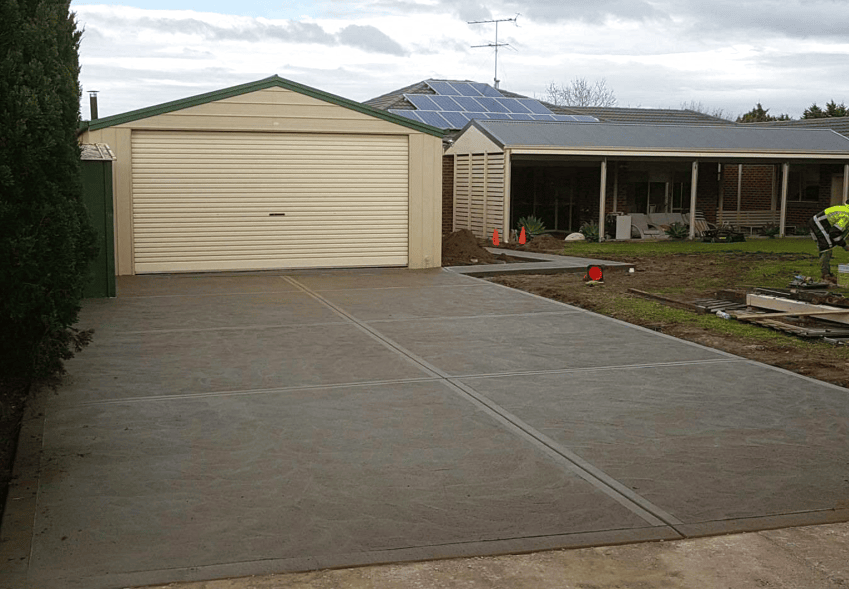
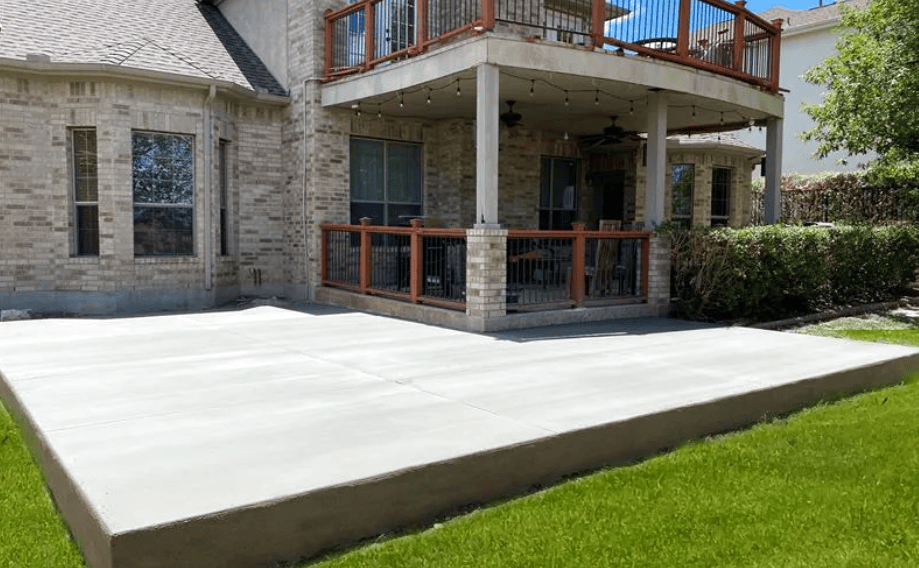
When homeowners in Greenville reach out to us, one of the first questions they ask is what kind of driveway will work best for their home. The answer depends on your budget, your neighborhood, how much foot and vehicle traffic you expect, and the look you want. Here is a breakdown of what we offer so you can walk into a conversation with us already knowing your options.
Plain Broom-Finished Concrete Driveways
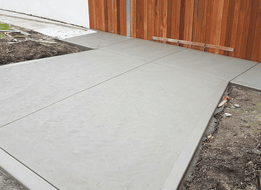
A broom-finished surface is our most straightforward option for concrete driveway installation. After we pour and screed the slab, we drag a broom across the surface while the concrete is still workable. That motion leaves a light texture that gives tires and shoes something to grip, which matters on a wet Upstate South Carolina afternoon. This finish holds up well, it is easy to clean, and it tends to cost less than decorative alternatives. For neighborhoods like Berea, Sans Souci, or Taylors where function and value are the priority, a plain broom finish is a reliable choice that will still look clean and sharp for decades when it is properly built.
Stamped Concrete Driveways
A stamped concrete driveway uses rubber or polyurethane molds pressed into fresh concrete to create patterns that resemble brick, slate, cobblestone, or natural stone. We apply a release agent before stamping so the molds lift cleanly, then we seal the surface to protect the color and texture. Homeowners in subdivisions like Hartness, Verdae, or Chanticleer often choose stamped concrete because it ties the driveway into the overall look of the home and landscape. The process requires more skill and time than a plain finish, so cost goes up, but the result is a surface that carries real visual weight without the ongoing upkeep that pavers demand.
Colored and Stained Concrete Driveways
Color can be added to concrete in a few different ways. Integral color is mixed directly into the batch so the pigment runs all the way through the slab. Dry shake hardener is broadcast across the surface before finishing, which concentrates color at the top and also adds density. Acid stains and water-based stains are applied after the concrete cures, reacting with or penetrating the surface to produce earthy, variegated tones. Products from Brickform and Butterfield Color give us a wide range of shades to work with. If your home is along Augusta Road or in Hollingsworth Park and your HOA or your own eye calls for something more refined than gray, a decorative concrete driveway with color is worth a close look.
Exposed Aggregate Concrete Driveways
Exposed aggregate is created by seeding crushed granite, river stone, or other decorative coarse aggregate into the surface, then washing and brushing the top layer of cement paste away before it fully sets. What remains is a textured, speckled surface with good slip resistance and a natural appearance. In areas near the Reedy River corridor or Cleveland Park, where homes often have a craftsman or nature-influenced style, exposed aggregate tends to blend in well. It also hides tire marks and minor surface wear better than a smooth or lightly broomed finish.
Comparing Your Options: Which Finish Fits Your Home
Each finish has a place depending on what you are working with. A broom finish keeps concrete driveway cost lower and delivers reliable performance under heavy use. Stamped and colored surfaces cost more upfront but give you concrete driveway design flexibility that plain gray simply cannot match. Exposed aggregate falls somewhere in between on cost and offers a texture that wears gracefully. Regardless of which surface you choose, the work underneath is the same: proper excavation, a compacted base of ABC stone, correct slab thickness, and the right mix. The finish on top is the last step, not the most important one. Once you know which direction appeals to you, the next step is putting together a plan and understanding what drives the cost of your specific project.
How We Plan and Price Your Driveway Project
Before any concrete is poured, we take time to walk through the details with you. Every driveway project is different, and the planning stage is where we figure out exactly what your property needs. We have over 20 years of combined experience pouring concrete and more than 10 years working right here in Greenville, so we know what local conditions demand and what a fair, honest quote looks like.
What Affects the Concrete Driveway Cost in Greenville, SC
Several factors shape the final price of your project. The size of the driveway is the most obvious one, but it is far from the only one. The finish you choose plays a big role too. A standard broom-finished slab costs less than a stamped concrete driveway or a decorative concrete driveway with color and texture. If you want a permeable concrete driveway that handles Greenville's heavy rain events and reduces runoff, that adds some material and labor cost as well.
Concrete driveway thickness is another real cost driver. Most residential driveways in the Greenville area call for a 4-inch slab thickness, but if you regularly park a truck, RV, or heavy equipment on your driveway, we typically recommend a 6-inch slab thickness with #4 rebar at 18-inch on center or 6x6 W1.4xW1.4 wire mesh. A reinforced concrete driveway costs more upfront but holds up far longer under load and reduces the chance of early cracking.
Site conditions here in Greenville also affect price. The Piedmont soil in this region, including the red clay and expansive clay common in neighborhoods like Botany Woods, Verdae, and along Augusta Road, often requires extra excavation and a thicker compacted base before we can pour. That work protects your slab for the long term, and we will always be upfront about what your specific lot needs.
Other cost factors include access to the site, slope, drainage requirements, whether we need to tie into an existing curb or sidewalk, and whether old concrete needs to be broken out and hauled away. We handle all of that, and we factor it into your quote rather than surprising you later.
How We Measure and Quote Your Driveway
We come out and measure your driveway in person before we give you a number. We look at the square footage, the slope of the land, the condition of the existing surface if there is one, and how water currently moves across your property. From there we build a written quote that breaks down materials, labor, and any site prep work separately so you can see exactly where your money is going.
We use concrete that meets or exceeds local standards, typically a 4000 psi mix with a 0.45 water-cement ratio sourced from suppliers like Carolina Concrete or Vulcan Materials Greenville. The mix is matched to your project, not just whatever is cheapest. We also account for concrete driveway design details like control joint spacing, which we generally place at 10-foot control joint spacing to manage cracking over time.
Understanding Deposits, Payment Options, and Financing
We ask for a deposit before work begins. This is standard practice and covers material orders and scheduling. The deposit amount is clearly stated in your written contract before you sign anything. We accept several forms of payment and can walk you through financing options if paying the full amount at once does not work for your situation. We want the process to be straightforward, and we are happy to answer any questions about how payments are structured before you commit.
Project Timeline and Scheduling Availability
Once your quote is accepted and your deposit is in, we get you on the schedule. Lead times vary depending on the season and how busy things are in the Greenville area. Spring and fall tend to fill up quickly because the weather conditions are ideal for concrete driveway installation. Summer work is common too, though we plan pours around the heat of the day to protect the mix during placement and curing.
A typical residential driveway takes one to two days to pour and finish. Curing takes longer. We generally recommend keeping vehicle traffic off the slab for at least seven days, and full 28-day compressive strength is reached after about a month. We will give you a realistic timeline before we start and keep you updated if anything changes.
Once the planning and pricing are settled, the next step is getting your site ready. That means looking closely at what is under your future driveway, because what happens below the surface is what determines how well the concrete performs for decades to come.
A few years back, we took on a concrete driveway job for a homeowner over in the Taylors area just outside Greenville. It seemed like a straightforward pour at first. The driveway was about 800 square feet, sloping slightly toward the garage, and the client wanted a clean brushed finish. We had done hundreds of jobs like it over our years working in the Upstate.
What we did not count on was the soil underneath. Once we started digging out the old gravel base, we found that a good portion of the ground was clay-heavy and had been holding water from a drainage problem in the yard. In Greenville, we deal with red clay soil pretty regularly, but this spot was worse than usual. The ground was soft and unstable in several sections, which meant pouring directly over it would have led to cracking and sinking within a year or two.
We stopped the job and had an honest conversation with the homeowner. We explained that skipping proper ground preparation would cost them far more down the road. We brought in extra compacted gravel fill, let it settle properly, and added reinforcement with rebar across the full slab. It pushed the timeline back by a couple of days and added some cost, but we were not willing to put our name on a driveway that was going to fail.
When we finished, the driveway came out level, strong, and exactly what the client had hoped for. That job reminded us why taking the time to do things right matters more than moving fast. If you are thinking about a new concrete driveway in Greenville, we will always take a hard look at what is underneath before we pour a single yard of concrete.
Site Preparation and Excavation
Before we pour a single yard of concrete, the ground beneath your driveway has to be ready to carry the load. In our experience working across Greenville and the surrounding area, poor site prep is the most common reason driveways crack, settle, or fail early. Getting this step right is what separates a driveway that lasts 30 years from one that needs concrete driveway repair within five.
Removing Your Old Driveway and Debris Disposal
If you already have an existing driveway, we break it out using a skid steer and haul the rubble off your property. We do not leave broken slabs on site or bury debris under the new base. Buried concrete and organic material will shift and decay over time, creating weak spots beneath your finished surface. We handle disposal cleanly so your yard is clear before the next phase begins.
Excavation, Grading, and Slope Planning
Once the old surface is gone, we excavate to the correct depth for your specific concrete driveway installation. We use GPS grade control to cut and fill the subgrade evenly. Proper grading at this stage determines how well your finished driveway sheds water. We plan slope lines before anything else is placed so the entire surface drains away from your home's foundation.
Subbase Preparation: Gravel, Compaction, and Soil Considerations
Greenville sits in the Piedmont region, and the soils here are mostly red clay and expansive clay derived from weathered granite and saprolite. These soils hold moisture and shift with wet and dry cycles, which puts stress on concrete slabs. We address that by removing unstable material and replacing it with a 4-inch compacted base of ABC stone or #57 stone sourced locally from suppliers like Vulcan Materials Greenville. We compact the base in lifts using a plate compactor or vibratory roller so there are no soft spots left behind. On fill soil or problem areas, we go deeper. A stable, well-compacted subgrade is what allows your slab to perform the way it should.
Drainage Planning for Greenville's Heavy Rain Events
Greenville sees significant rainfall throughout the year, and neighborhoods near the Reedy River, Brushy Creek, and low-lying areas around Sans Souci or Berea can experience runoff that overwhelms poorly graded surfaces. We plan drainage as part of site prep, not as an afterthought. That means grading the subbase to direct water away from your foundation and, where needed, incorporating channel drains or transitions that tie into your yard's natural drainage path. In areas where runoff to neighboring properties is a concern, a permeable concrete driveway may also be worth discussing as an option. Getting drainage right at this stage protects both your investment and your property long term.
With the site graded, compacted, and draining correctly, we move into the decisions that shape how your driveway performs under vehicle weight and daily use, starting with concrete thickness, reinforcement, and mix design.
Concrete Thickness, Reinforcement, and Mix Design
When we plan a new concrete driveway installation for your home in Greenville, the choices made before a single yard of concrete is poured have the biggest effect on how long that driveway will last. Thickness, reinforcement, and mix design are the three foundations of a driveway that holds up for decades. Here is what you should know about each one.
Recommended Concrete Thickness for Residential Driveways
For most homes in the Greenville area, a 4-inch slab thickness is the standard for passenger vehicles. If you regularly park a pickup truck, an RV, or a boat trailer on your driveway, we recommend stepping up to a 6-inch slab thickness. The extra two inches may seem minor, but it meaningfully increases the load capacity and reduces the risk of cracking under heavy weight. Greenville sits on Piedmont soil and red clay, which can shift and compress unevenly, so getting the slab thickness right from the start matters more here than in areas with more stable ground.
When to Use Rebar Versus Wire Mesh
Both rebar and wire mesh add tensile strength to concrete, but they serve slightly different purposes. Wire mesh, such as 6x6 W1.4xW1.4 WWR, works well in standard residential slabs where the primary goal is keeping any cracks from spreading. Rebar, typically #4 rebar at 18-inch on center, provides stronger reinforcement and is the better choice when the slab will carry heavier loads or when the subgrade is less stable, such as on fill soil or expansive clay. We assess your specific site conditions before recommending one over the other.
Fiber Reinforcement and Its Benefits
Synthetic fibers mixed directly into the concrete are another option we use on many projects. Fiber reinforcement does not replace rebar in high-load situations, but it does reduce plastic shrinkage cracking that can appear during the early curing stage. It is a useful addition to most residential concrete driveway installations and adds relatively little to the overall concrete driveway cost. For customers in neighborhoods like Verdae or Hollingsworth Park where surface appearance matters, fewer early surface cracks also means a cleaner-looking finished driveway.
Concrete Mix Strength and What PSI Rating Means for Your Driveway
PSI stands for pounds per square inch and describes how much compressive force the cured concrete can handle. We typically specify a 4000 psi mix for driveways in the Greenville area, though 3000 psi may be acceptable in lighter-use situations. The mix we order from local suppliers meets ASTM C94 standards and uses Type I/II Portland cement along with a carefully controlled 0.45 water-cement ratio to keep the concrete dense and durable. Adding too much water at the job site weakens the mix, which is one reason having an experienced crew on site matters. We also monitor slump in line with ASTM C143, targeting a 4-inch slump for workability without sacrificing strength. A proper 28-day compressive strength result confirms the slab will perform as designed over the long term.
Control Joints and Why They Matter for Crack Prevention
Concrete will shrink slightly as it cures, and it expands and contracts with temperature changes throughout the year. Without control joints, that movement has nowhere to go except into a random crack across your driveway. We saw or tool control joints following a 10-foot control joint spacing pattern, which guides any cracking to happen in straight, predictable lines that are easy to seal and much less noticeable than random fractures. Expansion joints are also placed where your driveway meets the garage slab, sidewalk, or curb to allow independent movement between those structures. This is part of concrete driveway maintenance planning that starts at installation.
Getting all of these technical details right requires more than just ordering a concrete truck and pouring. It also requires working within local rules and codes, which is why the next step in your project involves understanding the permit and licensing requirements specific to Greenville, SC.
Permits, Licensing, and Code Compliance in Greenville, SC
Before any concrete driveway installation begins, there are rules to follow. We have been working in Greenville for over 10 years, so we know what the City of Greenville Development Services and Greenville County Building Codes Enforcement expect. Getting this right from the start protects you from fines, delays, and required rework down the road.
When a Permit Is Required for a New Driveway in Greenville
Not every driveway project triggers a permit, but many do. In Greenville County, a permit is typically required when you are pouring a new driveway, replacing an existing one in full, or making changes that affect grading and drainage on your property. If your home sits within city limits, the City of Greenville Development Services handles the permitting process. For properties in unincorporated parts of the county, that falls under Greenville County Planning and Development. We handle permit applications on your behalf so nothing gets missed and the project stays on schedule.
Curb Cut Approvals and City or County Requirements
If your driveway connects to a public street, you will likely need a curb cut approval. This step involves the City of Greenville Public Works or Greenville County Roads and Bridges, depending on the road classification. For driveways that access state-maintained roads, the South Carolina Department of Transportation Greenville Office may also need to sign off. These approvals look at sight lines, drainage impact, and how the driveway ties into the existing curb or edge of pavement. We handle communication with these offices directly and make sure the transition from your driveway to the road is built to meet current standards.
Our Licensing, Insurance, and Compliance Standards
We carry a valid SC Contractor's License and maintain general liability insurance as well as worker's compensation coverage on every job. That matters because it shifts risk away from you. If something goes wrong on your property during the pour, you are not left holding the cost. Our crew members hold certifications including ACI Flatwork Technician and ACI Concrete Field Testing Technician, and we follow established standards like ACI 301 and ASTM C94 on every project. We also stay current with local code updates through the Home Builders Association of Greenville and the Upstate South Carolina Contractors Association. Whether your home is in Chanticleer, Verdae, or along Augusta Road, we make sure the work meets what inspectors look for and what your property actually needs.
Once permits are in order and code requirements are confirmed, the scope of your project may naturally grow to include more than just the main driveway slab. Many homeowners in Greenville find that expanding the driveway footprint, adding an apron, or tying into existing curbs and sidewalks is a smart move to consider at the same time.
Experienced Concrete Contractors Serving Greenville, SC
We are a concrete contractor based in Greenville, SC, and we have been pouring and finishing concrete in this area for over 10 years. Our crew brings more than 20 years of combined hands-on experience to every job, from small residential repairs to large commercial pours.
Working in Greenville means we know this area well. We understand the local soil conditions, the humidity that comes with South Carolina summers, and how the seasonal temperature swings here can stress a concrete surface if the mix and curing process are not handled correctly. That kind of local knowledge matters on every job we take on, whether we are installing a driveway in Simpsonville, a pool deck in Taylors, or a commercial slab in downtown Greenville.
We handle the full range of concrete work. That includes driveways, patios, garage floors, pool decks, sidewalks, foundations, retaining walls, stamped and decorative concrete, concrete cutting and removal, resurfacing, sealing, and staining. We also work on commercial and industrial projects, including parking lots, warehouse floors, and ADA-compliant ramps and sidewalks.
When you hire us, you get a crew that shows up prepared. We handle permits, site prep, forming, pouring, finishing, and cleanup. We carry insurance and stand behind our work with a written warranty. You will know exactly what is included before we start, and we keep you informed throughout the project.
If you have a concrete project coming up and want to know what it will take to get it done right, we are glad to come out, take a look, and give you a free estimate.
Driveway Expansions, Aprons, and Tie-Ins
Many Greenville homeowners reach a point where their existing driveway just does not fit their needs anymore. Whether you have added a vehicle, need room for a boat or trailer, or simply want better access to your garage, expanding your current concrete driveway is a practical option. We have handled these kinds of projects across areas like Augusta Road, Mauldin, Simpsonville, and subdivisions such as Hollingsworth Park and Five Forks. Before any concrete is poured, we assess what you already have so the new work ties in correctly and holds up long term.
Widening an Existing Driveway
Adding width to a concrete driveway sounds straightforward, but the details matter. The existing slab edge needs to be evaluated for condition and thickness before we form up alongside it. We typically use an isolation joint filler between the old and new concrete to allow each section to move independently. This prevents cracking at the seam. For most residential driveways in Greenville, we pour to a 4-inch slab thickness on well-compacted subgrade, stepping up to a 6-inch slab thickness where heavier vehicles will park. Greenville County's red clay and expansive Piedmont soils require proper subgrade preparation, including a compacted base layer of ABC stone, before any forming begins. Skipping that step is one of the most common reasons widened sections crack or settle away from the original slab.
Driveway Apron Installation and Street Tie-Ins
The apron is the section of your driveway that connects to the public street, and it takes more wear than almost any other part. Vehicles turning in and out put repeated stress on this area. We form aprons to handle that load, often using #4 rebar at 18-inch on center and a 4000 psi mix to give the apron enough strength to hold up under daily use. If your driveway connects to a city or county road, we coordinate with the City of Greenville Development Services or Greenville County Building Codes Enforcement for any required permits before we start. Work near South Carolina Department of Transportation right-of-way along roads like Wade Hampton Boulevard or Woodruff Road may require additional approvals. We handle that process so you do not have to.
Connecting to Sidewalks, Curbs, and Garage Slabs
Where your driveway meets a public sidewalk, a curb, or your garage floor, the transition has to be done right. A poor tie-in can create a trip hazard, allow water to pool near your foundation, or cause the sections to shift apart over time. We use expansion joints and isolation joint filler at these connections to let each slab move without cracking the other. Slope and drainage are checked carefully at every transition point. Water that collects at the garage threshold or at a sidewalk crossing can work its way under the slab and erode the base over time, which is a real concern in Greenville given the heavy rain events we see through spring and summer along the Reedy River corridor and surrounding areas.
Turnarounds, Parking Pads, and Extended Driveway Areas
Adding a turnaround or a parking pad at the end of your driveway changes how the whole property functions. These areas also open up options for concrete driveway design, since a larger surface gives us room to work with finishes like a stamped concrete driveway pattern or exposed aggregate to break up the visual weight of a wide slab. Functional layout matters too. We plan turnarounds so vehicles can exit forward onto the street, which matters on busier roads near areas like Greer, Taylors, or along Pelham Road. Parking pads sized for trucks or RVs are built to a 6-inch slab thickness with reinforcement to match the load.
Whether you are expanding by a few feet or adding a full turnaround, the quality of each section depends on the same fundamentals: proper base preparation, the right concrete mix, correct reinforcement, and joints placed where they need to be. When any part of that process is missed, problems show up sooner than they should. That brings us to what happens when an existing driveway starts showing those signs, and what your repair options actually look like.
Concrete Driveway Repair Options
Not every damaged driveway needs to be torn out and replaced. After working on concrete driveways across Greenville for over ten years, we have seen a wide range of damage, and in many cases, targeted repair work is a practical and cost-effective path forward. That said, knowing when to repair and when to walk away from an aging slab is just as important as the repair work itself.
Crack Repair and Patching for Existing Driveways
Cracks are the most common issue we see on driveways throughout neighborhoods like Augusta Road, North Main, and Berea. Not all cracks mean the same thing. Hairline surface cracks are often cosmetic and can be filled with an epoxy joint filler or a polymer-modified patching compound. Wider or deeper cracks, especially those that have shifted vertically, point to something happening beneath the surface, usually in the subgrade.
Greenville sits on Piedmont soil and red clay that expands and contracts with moisture. That movement stresses concrete slabs over time. When we patch cracks here, we are not just filling the gap. We look at whether the underlying soil has shifted, whether drainage is directing water toward the slab, and whether the crack is still moving. A patch that goes over an active problem will not last.
When to Repair Versus When to Replace
A driveway with isolated cracks, minor surface scaling, or a few spalled areas is usually a good candidate for concrete driveway repair. However, if you are seeing widespread cracking across multiple panels, significant vertical displacement, or areas where the slab has sunk more than an inch or two, replacement often makes more financial sense. We give you an honest assessment based on what we find, not on what costs more.
If a slab was originally poured thin, say less than a 4-inch slab thickness, or was never properly reinforced, repeated repairs may only delay the inevitable. In those cases, we typically recommend a full concrete driveway installation using a 4-inch to 6-inch slab thickness, proper compacted base material like ABC stone, and either wire mesh or #4 rebar at 18-inch on center spacing depending on the load requirements.
Partial Replacement and Section Work
One of the more practical options for driveways in good overall condition is partial replacement. If one or two panels are severely damaged while the rest of the slab is solid, we can saw-cut along existing control joints, remove only the problem sections, and pour new concrete to match. We use a concrete saw to make clean cuts and take care to tie the new pour into the existing slab properly so the transition holds up over time.
Color matching is worth discussing honestly. New concrete will cure lighter than an aged slab, so there will be a visible difference initially. Over time, weathering closes that gap somewhat, but it rarely disappears completely. We let you know what to expect before the work starts.
Surface Grinding and Leveling for Sunken or Uneven Areas
Uneven slab sections create trip hazards and can direct water toward your garage or foundation. In some cases, grinding down a raised edge is the right fix. In others, a sunken panel needs to be either lifted through mudjacking or removed and replaced entirely. We evaluate whether the void or settlement beneath the slab makes lifting a viable long-term solution or whether the subgrade needs to be corrected first.
Surface grinding is also useful when a finished slab has become too smooth over time and poses a slip risk. We can re-texture the surface to restore traction without replacing the whole slab.
Once any repair or replacement work is complete, protecting the surface becomes the next priority. Sealing and finishing are what keep a repaired or new driveway looking and performing well for years to come.
Sealing, Finishing, and Protective Coatings
Why Sealing Your Concrete Driveway Matters
After we finish pouring and curing your driveway, sealing it is one of the most practical steps you can take to protect your investment. Concrete is a porous material, which means water, oils, and dirt can work their way into the surface over time. In Greenville, we also deal with heavy rain events that push moisture against driveways regularly. A quality sealer closes those surface pores, slows water absorption, and helps your driveway hold up under daily vehicle traffic for years longer than an unsealed slab. Concrete driveway maintenance starts here, and skipping this step usually means more repair work down the road.
Types of Sealers We Use and How They Perform
We choose sealers based on your driveway's finish type and how it will be used. For most standard broom-finished slabs, we apply an acrylic cure and seal product from trusted manufacturers like Euclid Chemical or W.R. Meadows. This type does double duty by helping the concrete reach its full 28-day compressive strength while also leaving a light protective film on the surface. For plain or decorative concrete driveways that need deeper protection, a lithium silicate densifier penetrates the slab and reacts with the concrete itself, hardening the surface from within. On stamped concrete driveways, we typically use a higher-solids acrylic sealer that also brings out the color and texture of the finish. Each product is matched to what your slab needs, not just what is easiest to apply.
Reflective and Heat-Resistant Finishes for Greenville Summers
Greenville summers get hot, and a south-facing driveway can absorb a lot of that heat through the day. Lighter finishes and certain acrylic sealers with reflective properties help keep surface temperatures more manageable. For decorative concrete driveway projects where integral color or a stamped pattern is part of the design, we pay close attention to color selection since lighter tones naturally reflect more heat than darker ones. Brickform and Butterfield Color both offer finish systems we use regularly that hold up well under the Upstate heat without fading quickly or turning chalky.
How Often to Reseal and What to Watch For
Most driveways in the Greenville area benefit from resealing every two to three years, depending on traffic levels and sun exposure. You can do a simple water test yourself: pour a small amount of water on the surface. If it beads up, the sealer is still working. If it soaks in quickly, it is time to reseal. You should also keep an eye out for surface scaling, small cracks, or areas where the sealer has worn unevenly. These are usually signs that concrete driveway repair or a fresh coat of sealer is needed before deeper damage sets in. Catching these things early is far less costly than waiting.
Staying on top of sealing and surface care is important here in Greenville, but it is only one part of the picture. The climate and the soil beneath your driveway also play a significant role in how your concrete performs over time, and that is worth understanding before and after your driveway is installed.
Greenville Climate and Soil Considerations
How Heat and Humidity Affect Concrete in the Upstate SC Region
Greenville sits in the Upstate region of South Carolina, where summers bring sustained heat and high humidity. Those conditions matter when we pour concrete. Hot weather speeds up the hydration process, which means concrete can stiffen faster than intended and become harder to finish properly. We manage this by timing our pours carefully, often scheduling early morning work during peak summer months. We also adjust the mix design, sometimes using a water reducer or controlling the water-cement ratio to keep things workable without weakening the slab. Proper curing under ACI 308 guidelines is especially important here. When concrete dries out too fast in the heat, surface strength suffers. We apply curing compound to hold moisture in during the critical early days after placement, which helps the slab reach its full 28-day compressive strength.
Managing Heavy Rainfall and Runoff on Your Property
The Upstate gets significant rainfall throughout the year, and the Reedy River and Brushy Creek watersheds see regular runoff from heavy storms. A concrete driveway that is not graded correctly can push water toward your foundation or onto neighboring property. We use GPS grade control and laser screed technology to establish accurate slopes during concrete driveway installation, directing water away from your home and toward the street or a designated drainage area. For homeowners in lower-lying areas or properties with drainage challenges, a permeable concrete driveway is worth considering. Permeable concrete allows water to pass through the surface and filter into the ground below, reducing surface runoff. We hold NRMCA Pervious Concrete Technician certification, so we understand the mix design and base requirements that make permeable systems work in Greenville's soil conditions.
Soil Types in Greenville and How They Influence Driveway Performance
Greenville sits within the Piedmont region of South Carolina, and the soil here tells a specific story. Red clay, expansive clay, saprolite, and residual soils derived from weathered granite are common throughout neighborhoods like Augusta Road, North Main, and out toward Taylors and Simpsonville. These soils shift with moisture changes. When wet, expansive clay swells. When dry, it shrinks. That movement puts stress on anything sitting on top of it, including your driveway. We address this by excavating down to stable subgrade, compacting thoroughly with a plate compactor or vibratory roller, and installing a proper base layer of ABC stone or #57 stone before any concrete is placed. A 4-inch compacted base is standard, though some sites with poor fill soil require more. Skipping this step is one of the most common reasons driveways crack early, and it is something we never cut corners on.
Freeze and Thaw Cycles in Greenville: What You Need to Know
Greenville does not experience the hard winters common further north, but the Upstate does see freeze and thaw cycles, particularly between November and March. When water trapped in concrete pores freezes, it expands and can damage the surface over time. A reinforced concrete driveway with the right mix design handles these cycles much better than one that was not built to account for them. We specify mixes with air-entraining admixture, which creates tiny air pockets in the concrete to absorb freeze-thaw pressure. A 4000 psi mix with around 6 percent air entrainment gives a slab the resilience it needs for Greenville winters. We also recommend against using deicing salt on concrete driveways here. Salt accelerates surface scaling, especially on newer slabs. Sand is a safer option for traction during icy stretches. Choosing the right concrete driveway thickness, typically a 4-inch slab for passenger vehicles or a 6-inch slab for heavier loads, also plays a role in how well the driveway holds up through seasonal temperature swings year after year.
Understanding how Greenville's climate and soils affect your driveway helps set realistic expectations for how it will perform over time. That same understanding shapes how we approach warranty coverage, sealing schedules, and the maintenance steps that keep your driveway in good shape for decades.
Warranty, Maintenance, and Long-Term Care
A concrete driveway is a long-term part of your home, and we treat it that way. Once the job is done, our relationship with you does not end at the curb. Here is what you can expect from us after installation.
What Our Workmanship Warranty Covers
We stand behind every driveway we pour. Our workmanship warranty covers defects related to how the work was done, including problems with joint placement, surface finishing, and slab settlement caused by subgrade preparation we performed. If a crack develops due to something within our control, we come back out and address it. What the warranty does not cover is damage caused by outside forces, such as tree root intrusion, vehicle overloading, or chemical exposure from deicing salt applied by the homeowner. We walk you through all of this before the project starts so there are no surprises later.
How Long a Concrete Driveway Lasts in Greenville, SC
A properly built reinforced concrete driveway in Greenville can last 30 years or more. Our area sits in the Piedmont region, where red clay and expansive soils can shift under a slab if the subgrade is not prepared correctly. We compact the base, use ABC stone to create a stable foundation, and pour to a 4-inch or 6-inch slab thickness depending on your load needs. We also use a concrete mix that meets 4000 psi 28-day compressive strength and include an air-entraining admixture to handle the occasional freeze-thaw cycles we see in Upstate South Carolina. With that kind of foundation, your driveway is built to go the distance.
Routine Maintenance Tips to Protect Your Investment
Good concrete driveway maintenance does not have to be complicated. Here are the basics that keep a driveway performing well over the years.
- Seal the surface every two to three years using a sodium silicate sealer or acrylic cure and seal product. This protects against moisture, oil stains, and surface wear.
- Keep the joints clean. Control joints and expansion joints can collect debris over time. Refilling them with epoxy joint filler when needed prevents water from working its way underneath the slab.
- Avoid deicing salt whenever possible. Salt accelerates surface scaling, especially in the first year after a pour. Sand is a safer option for traction on cold days.
- Clean up oil or fuel spills promptly. These do not soak into sealed concrete quickly, but leaving them sitting can break down a sealer over time.
- Watch for pooling water near the slab edges. If drainage patterns change around your yard, address them early before water starts undercutting the base.
Post-Installation Follow-Up and Our Availability After the Job
After we finish your concrete driveway installation, we do not disappear. We schedule a follow-up to check on curing progress and make sure everything looks right. If you notice anything in the weeks after installation, including small surface questions or concerns about how joints are developing, you can reach us directly. We have been working in Greenville for over 10 years, and a big part of why homeowners in areas like Augusta Road, Hollingsworth Park, and Five Forks come back to us or refer neighbors is because we answer the phone and show up when something needs attention.
If concrete driveway repair becomes necessary down the road, whether that is crack routing, patching, or partial slab replacement, we handle that too. Knowing the history of how your driveway was built makes it easier for us to diagnose any issue and give you an honest answer about the right fix.
With the long-term side of your project covered, you probably want to see what our finished work actually looks like. In the next section, we share photos from jobs around Greenville and reviews from homeowners who have worked with us firsthand.
Our Work in Greenville: Portfolio and Customer Reviews
Recent Concrete Driveway Projects in the Greenville Area
Over the years, we have completed concrete driveway installation projects across Greenville and the surrounding communities. From Augusta Road and North Main to Simpsonville, Taylors, and out toward Travelers Rest, we have worked on driveways of all shapes and sizes. Some jobs involve a straightforward replacement of an aging slab. Others call for a stamped concrete driveway with a custom border or a decorative concrete driveway with an exposed aggregate finish. We have also poured reinforced concrete driveways for homeowners who park heavy trucks or trailers on a regular basis, using #4 rebar at 18-inch on center and a 6-inch slab thickness where the load demands it.
In neighborhoods like Botany Woods, Hartness, and Five Forks, we frequently work around mature landscaping and tight lot lines. Each site gets proper subgrade prep using compacted ABC stone and careful grading so water moves away from the home. No two driveways are exactly the same, and we treat each project with that in mind.
What Our Local Customers Say About Working With Us
The homeowners we work with in Greenville County tend to care about a few things: showing up when we say we will, communicating clearly about the schedule, and leaving the site clean when the job is done. Those are things we take seriously. We have built relationships with customers in areas like Mauldin, Greer, Berea, and Overbrook through straightforward work and honest communication. Our reviews reflect that. Customers regularly mention that we explained the process, respected their property, and delivered a finished driveway that held up the way we said it would.
Before and After Photos From Greenville Neighborhoods
Photos tell a clearer story than descriptions alone. Our project gallery includes before and after images from driveways across Greenville, showing the full process from excavation and subgrade preparation through finishing and curing. You can see the difference proper concrete driveway design and preparation make, especially on lots with Piedmont soil or red clay that requires extra attention to compaction and drainage. If you want to get a sense of the quality and range of our work before reaching out, the photos are a good place to start. After browsing them, the next step is a conversation about your own project.
Why Greenville Homeowners Choose Us for Their Concrete Driveways
After seeing our work across neighborhoods like Augusta Road, Botany Woods, Hollingsworth Park, and Five Forks, many homeowners ask the same question: why does it matter who pours the concrete? The answer comes down to what happens before, during, and after the pour.
Greenville sits on Piedmont soil and red clay that expands and shifts with moisture. Without proper subgrade preparation, even a solid-looking driveway can crack or settle within a few years. We have over 20 years of combined experience pouring concrete and more than 10 years working right here in Greenville, so we understand exactly how local soil and weather conditions affect concrete driveway installation. We prepare your subgrade correctly, use the right concrete mix, and place control joints where they belong so your driveway holds up for decades.
Here is what you get when you work with us:
- Proper excavation, grading, and compacted base material to prevent settling
- Correct slab thickness and reinforcement sized for your vehicle load, whether that means a 4-inch slab thickness for standard vehicles or a 6-inch slab thickness for heavier use
- Concrete mixed to meet strength requirements, typically 4000 psi with a 0.45 water-cement ratio, sourced from trusted local suppliers
- Accurate slope and drainage so water moves away from your home and your neighbors' property
- A wide range of concrete driveway design options including a stamped concrete driveway, decorative concrete driveway finishes, or a permeable concrete driveway for improved drainage
- Proper curing methods following ACI 308 guidelines so your slab reaches its full 28-day compressive strength
- SC Contractor's License, general liability coverage, and worker's comp so you are fully protected
- Permit handling through Greenville County Building Codes Enforcement or City of Greenville Development Services, depending on your location
- Honest guidance on concrete driveway maintenance, sealing schedules, and concrete driveway repair if you ever need it down the road
- A clean job site and a crew that respects your landscaping and property
- A workmanship warranty and follow-up support after the project is complete
A well-built concrete driveway adds curb appeal, handles years of heavy use, and protects your property value. The concrete driveway advantages are real, but only when the work is done right from the ground up.
How to Get Your Free Estimate and What to Expect Next
Getting started is straightforward. We will talk through your project, take a look at your site, and give you a clear estimate with no pressure and no hidden fees. You will know what materials we plan to use, how long the work will take, and what the total concrete driveway cost will be before anything is scheduled.
We serve homeowners throughout Greenville and the surrounding area, including Mauldin, Simpsonville, Taylors, Greer, Travelers Rest, and Fountain Inn. Whether you are replacing a cracked old slab or starting fresh on a new home, we are ready to help.
Call us directly or fill out the quote form below to get your free estimate. We will follow up quickly, usually within one business day, to set up a time that works for you.
Greenville SC Concrete
220 N Main St
Greenville, SC 29601
Business Hours
| Mon | 8:00 AM – 7:00 PM |
| Tue | 8:00 AM – 7:00 PM |
| Wed | 8:00 AM – 7:00 PM |
| Thu | 8:00 AM – 7:00 PM |
| Fri | 8:00 AM – 7:00 PM |
| Sat | 9:00 AM – 6:00 PM |