Industrial Concrete Services in Greenville
Industrial Concrete Services for Greenville Facilities
Service Area and Availability in Greenville, SC
We provide industrial concrete solutions throughout Greenville, SC and the surrounding Upstate region. Our crews work across Greenville County and into neighboring areas including Greer, Mauldin, Simpsonville, Taylors, and Fountain Inn. Whether your facility sits along the Interstate 85 corridor, near the Woodruff Road commercial zone, or out toward Pelham Road, we can reach your site quickly and keep your project moving on schedule. We are available for new construction, scheduled maintenance, and urgent repair work at industrial and commercial properties.
Common Pain Points for Industrial Concrete Buyers
Industrial facilities put concrete under stress that residential and light commercial work never sees. Forklifts, heavy racking loads, chemical spills, and constant wheel traffic wear down floors faster than most property managers expect. When a slab starts showing cracks, spalling, or uneven surfaces, it is not just a cosmetic issue. It creates safety hazards, interrupts operations, and can knock automated equipment and storage racking out of alignment. We hear this regularly from warehouse and distribution facility managers: the floor was fine for a few years, then maintenance costs started climbing and downtime became a real problem. Concrete repair services can address many of these issues, but getting the original pour right is what keeps those problems from developing in the first place. If you are planning a new build or looking at a deteriorating slab, you are in the right place.
Local Knowledge: Greenville Industrial Corridors, Soil Conditions, and Climate Factors
Greenville sits on the Piedmont Plateau, and the soil conditions here are not forgiving. Much of Greenville County is underlain by red clay, residual soil, and in some areas saprolite from weathered rock. These soils shift with moisture changes and can create serious bearing capacity problems if subgrade preparation is not handled correctly. We have spent over 10 years working on industrial sites across Upstate South Carolina, and we know how Greenville County clay soils behave under a loaded slab. The industrial corridors along Interstate 85 and around the Greenville-Spartanburg International Airport area are particularly active right now, with distribution centers and manufacturing facilities expanding steadily. Companies like BMW Manufacturing and Michelin North America have helped drive demand for high-quality industrial site preparation and slab work throughout the region. We also factor in Upstate climate conditions, including summer heat that affects concrete placement and curing, and occasional winter freezes that can compromise freshly poured slabs if curing is not managed properly. As experienced industrial concrete contractors with roots in this area, we bring that local understanding to every project we take on.
Greenville Industrial Concrete FAQ
What PSI concrete do industrial floors typically need? Most warehouse and distribution slabs we pour in the Greenville area call for 4000 PSI compressive strength at minimum. Heavy manufacturing environments often specify 5000 PSI, and we work with mix designs using materials like silica fume and fly ash Class F to hit those targets reliably under ASTM C39 testing.
Do you handle permitting in Greenville County? Yes. We work directly with Greenville County Building Safety and the City of Greenville Building Codes and Permitting office. We understand the local process, and we handle the documentation needed to keep your project compliant with the SC Building Code and ICC IBC standards.
Can you work around an active facility? We do this regularly. Sequencing pours, coordinating with your operations team, and minimizing disruption are part of how we plan every industrial job. We have worked in and around active manufacturing and distribution environments throughout the Upstate region.
What reinforcement options are available for heavy-load slabs? Concrete reinforcement for industrial floors typically involves #5 rebar at 12 inches on center, welded wire fabric, or post-tension cables depending on design requirements. We evaluate each project individually and follow ACI 360R guidelines for slab-on-grade design to match reinforcement to the actual loads your floor will carry.
The sections that follow go deeper into what our industrial concrete work actually covers, from site prep and forming through finishing, coatings, and long-term repair.
What Industrial Concrete Services Include
How Industrial Concrete Differs from Residential and Light Commercial Work
Industrial concrete work is a different category of construction entirely. When we pour a slab for a warehouse, distribution center, or manufacturing facility, the loads, tolerances, and material requirements are far more demanding than anything you would find in a home driveway or a strip mall parking lot. Forklifts, heavy racking systems, and industrial equipment place concentrated stress on a floor that a standard residential mix simply cannot handle. We design and pour slabs to 5000 PSI compressive strength or higher when the application calls for it, using reinforcement like #5 rebar at 12 inches on center or post-tension cable systems to meet structural requirements. Flatness and levelness matter too. Automated warehouses and tall racking systems often require floors built to a precision F-number of FF 35 FL 25 or tighter. Getting that right takes trained crews, the right equipment, and a solid understanding of mix behavior from placement through finishing.
Types of Facilities We Serve in Greenville
We work with facility managers, general contractors, and property owners across the Greenville area on projects ranging from tilt-up distribution centers along the Interstate 85 corridor to equipment pads inside manufacturing plants near the Pelham Road and Woodruff Road areas. Our industrial concrete solutions support warehouses, cold storage facilities, food processing plants, chemical containment areas, wash bays, truck terminals, and heavy fabrication shops. Greenville County has seen significant industrial growth, and facilities tied to manufacturing operations throughout the Upstate region need concrete that holds up under real daily use, not just light traffic.
Overview of the Full Scope of Services We Provide
Our work covers the full project cycle for industrial concrete. That includes industrial site preparation, demolition, excavation, subgrade compaction, and forming before a single yard of concrete is placed. From there, we handle concrete reinforcement, mix design, concrete pumping solutions using equipment like the Putzmeister Boom Pump, laser screed finishing, joint sawcutting, and curing. We also provide protective floor coatings, moisture mitigation, and concrete repair services for existing slabs that need remediation. Whether you need a new slab built to ACI 302.1R guidelines or an existing floor brought back into service, we have the crew, the certifications, and the local experience to get it done correctly. All of that starts well before concrete is ever ordered, with thorough attention to what is happening below the surface.
Site Preparation, Demolition, and Excavation
Before any concrete is poured, the ground beneath it has to be right. We have spent over 10 years working on industrial sites across Greenville, and we know that what happens below the surface determines how long a slab holds up. Greenville County sits on the Piedmont Plateau, where red clay subgrade, saprolite, and residual soils are common. These soils shift and compress differently than sandy or rocky ground, so we treat site preparation as a critical part of every project, not just a starting step.
Demolition of Existing Slabs and Structures
When a facility needs new concrete, old slabs, footings, or structures often have to come out first. We use saws, breakers, and skid steers to remove existing concrete cleanly and efficiently. The Husqvarna FS 6600 flatsaw and Hilti DD 350-CA core drill give us the control to cut and remove sections without disturbing surrounding areas. Concrete debris is sorted on site, and we follow Greenville County disposal and erosion control requirements throughout the process. Where it makes sense, recycled concrete aggregate from the demolition can be crushed and reused as subbase fill material.
Grading, Excavation, and Compaction
After demolition, we grade and excavate to the required depth based on your structural plans and soil conditions. Greenville County clay soils and expansive clay layers can cause slabs to heave or settle if not handled properly. We use a Troxler 3440 nuclear density gauge to verify compaction at every lift, meeting the bearing capacity requirements called for under ICC IBC and the SC Building Code. Proper compaction is one of the most overlooked steps in industrial site preparation, and skipping it leads to slab failure that costs far more to fix than to prevent.
Subbase Preparation for Heavy Industrial Loads
Warehouses, distribution centers, and manufacturing facilities place serious demands on the ground below. We build subbases using crushed granite aggregate sourced locally through suppliers like Vulcan Materials Greenville and Martin Marietta Greenville. Depending on soil reports and load requirements, we may also recommend subgrade stabilization, geotextile fabric layers, or moisture barrier systems using polyethylene vapor barriers rated at 10 mil or heavier. Getting the subbase right is what allows us to design slabs that meet 5000 PSI compressive strength targets and hold up under forklifts, heavy racking, and machinery over the long term. With the subbase confirmed and compacted, we are ready to begin forming and pouring your industrial concrete slabs and foundations.
A few years back, we took on a big industrial concrete job for a manufacturing facility off Woodruff Road here in Greenville. The client needed a heavy-duty concrete floor that could handle constant forklift traffic and the weight of large industrial equipment. We felt confident going in, but this project threw us a curveball we did not see coming.
About two days into the pour, we discovered that the soil underneath the slab had not been properly compacted by a previous contractor. This is something that can completely ruin an industrial concrete floor if you do not catch it in time. A weak base means the slab will crack and shift under heavy loads, which is a serious problem in an industrial setting where safety matters most.
We stopped work right away and brought in soil compaction equipment to fix the base before we went any further. It cost us extra time and pushed back our schedule by almost a week. We had an honest conversation with the client about what we found and what needed to happen. They appreciated us being straight with them rather than just pouring over the problem and hoping for the best.
Once the base was solid, we finished the pour and used a special industrial-grade mix designed to hold up under the heavy demands of their facility. That floor is still holding strong today. Working in Greenville for over 10 years has taught us that doing the job right always matters more than doing it fast. Our 20 plus years of combined experience has shown us time and again that shortcuts in concrete work always catch up with you eventually.
Industrial Concrete Slabs and Foundations
We have spent over 20 years pouring concrete and more than 10 of those years working on industrial projects across Greenville, SC and the surrounding Upstate area. From sites near the Woodruff Road Corridor to facilities off Interstate 85, we understand what it takes to build concrete work that holds up under serious industrial use. The industrial concrete solutions we provide are built around your facility's specific load requirements, soil conditions, and long-term performance needs.
Warehouse and Distribution Center Floor Slabs
Warehouse and distribution center floors take a beating every day from forklifts, pallet jacks, and heavy storage racking. We design and pour floor slabs to meet the flatness and levelness tolerances your operation depends on. Using equipment like the Somero S-485 Laser Screed and Multiquip Whiteman power trowels, we routinely achieve F-number ratings of FF 35 FL 25 or better. We also work to ACI 302.1R guidelines and specify reinforcement such as #5 rebar at 12 inches on center or welded wire fabric based on your load design. Slab thickness typically runs 6 to 8 inches for distribution applications, depending on bearing capacity testing of the subgrade below.
Factory and Manufacturing Floor Pours
Manufacturing floors face chemical exposure, heavy equipment traffic, and vibration that standard concrete cannot always handle on its own. We work with industrial-grade admixtures and specify mixes with 4000 to 5000 PSI compressive strength depending on your process requirements. Greenville County's red clay subgrade and saprolite layers common across the Piedmont Plateau require careful subgrade stabilization before any pour. We handle that work as part of our industrial site preparation process so the slab performs the way it should from day one. Concrete reinforcement using ASTM A615 Grade 60 rebar and fiber mesh polypropylene is standard on manufacturing pours where impact and cracking resistance matter.
Foundations, Footings, and Equipment Pads
We pour foundations and footings for tilt-up structures, heavy storage systems, mezzanines, and building additions throughout Greenville County. All work is designed and executed to comply with ACI 301, the ICC International Building Code, and the SC Building Code. We pull permits through the appropriate offices, whether that is Greenville County Building Safety or the City of Greenville Building Codes and Permitting department, and we coordinate inspections to keep your project on schedule. Equipment pads for compressors, generators, and processing units require precise dimensions and correct concrete consolidation to eliminate voids. We use Vibco concrete vibrators during placement to ensure full consolidation around anchor bolt assemblies and rebar cages.
Machinery Bases and Anchor Bolt Placement
Machinery bases require a level of accuracy that goes beyond standard flatwork. CNC equipment, conveyors, presses, and other precision machinery depend on bases that are plumb, level, and properly cured before installation begins. We set anchor bolts using template systems to hold position within tight tolerances during the pour. A 10 mil vapor barrier is placed beneath machinery bases in climate-sensitive environments to prevent moisture migration from affecting the slab or the equipment above it. Curing is handled per ACI 308R standards to ensure the concrete reaches full design strength before any load is applied.
The foundation of any industrial concrete project starts with the right mix design. Once the slab or base is in place and performing structurally, the concrete itself needs to meet specific strength and durability requirements for the demands of your facility. That leads us to how we approach high-strength concrete mixes and PSI performance.

High-Strength Concrete Mixes and PSI Performance
Understanding PSI Ratings and Why They Matter for Industrial Use
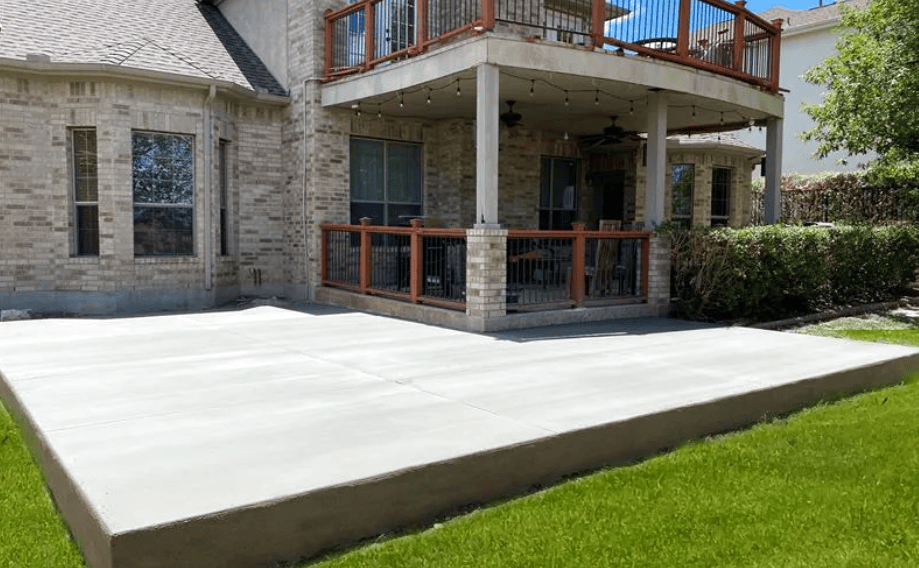
PSI stands for pounds per square inch, and it measures how much compressive force a cured concrete slab can handle before it fails. For industrial facilities around Greenville, this number is not a minor detail. A warehouse floor that carries loaded forklifts, pallet racking, or heavy machinery needs a mix designed to hold up under that kind of stress day after day. A standard residential slab might be poured at 3000 PSI at 28 days, but most industrial concrete solutions we work on call for 4000 PSI compressive strength or 5000 PSI compressive strength depending on the loads involved. Getting this wrong leads to surface scaling, cracking, and early slab failure, which costs far more to fix than it would have to specify correctly from the start.
How We Select and Specify Concrete Mixes for Your Project
We do not use a one-size-fits-all mix. Every project starts with a look at what the slab actually needs to do. We review your load requirements, the subgrade conditions, and any chemical or moisture exposure the floor will face. Greenville County's red clay subgrade and the expansive clay soils common across the Piedmont Plateau can shift under a slab if the mix and base prep are not matched to local conditions. We pull materials from suppliers like Vulcan Materials Greenville and Ready Mix USA Greenville, and we specify mixes using Type I/II Portland Cement as a base, sometimes blending in Fly Ash Class F or GGBS Slag Cement to improve long-term strength and reduce heat of hydration on larger pours. Water-cement ratio matters just as much as the cement content itself. We typically target a 0.45 water-cement ratio for industrial concrete solutions requiring durability and reduced permeability. Every load is tested on site per ASTM C143 for slump and ASTM C39 for compressive strength so you have documentation that the concrete placed matches what was specified.
Admixtures, Fiber Reinforcement, and Performance Additives
Admixtures let us fine-tune a mix without changing the basic water-cement ratio or aggregate design. For large placements in Greenville's summer heat, we use retarders like Daratard 17 to slow setting time and give our crews a workable window. On cold weather pours, we may use Type III Portland Cement along with concrete blankets to protect the slab during curing, following ACI 306R guidelines. High-range water reducers such as Sika ViscoCrete or Master Glenium 7500 allow us to place a workable mix without adding excess water that would weaken the finished slab. For floors that need moisture resistance, Kryton Krystol T1 can be added directly to the mix to create a crystalline barrier within the concrete itself. We also incorporate fiber reinforcement on most industrial pours. Fibermesh 150 and polypropylene fiber mesh at the right dosage rate reduce plastic shrinkage cracking during the early curing stage. For slabs carrying especially heavy point loads, fiber works alongside, not instead of, structural reinforcement. These mix design decisions connect directly into how we approach the reinforcement systems that go into every slab we pour.
Concrete Reinforcement Systems
When we pour concrete for industrial facilities around Greenville, the mix design is only part of the equation. How the slab is reinforced underneath determines how well it holds up to forklifts, loaded pallet racking, and heavy equipment over the long run. As part of our industrial concrete solutions, we take reinforcement seriously on every project, whether we are working along the Woodruff Road Corridor, near the Pelham Road Corridor, or out toward Greer and Simpsonville.
Rebar and Wire Mesh Reinforcement
For most warehouse and distribution center floors, we use concrete reinforcement in the form of rebar or welded wire fabric, depending on the load requirements and slab thickness. A common setup for mid-duty industrial slabs is #4 rebar at 18 inches on center, while heavier applications call for #5 rebar at 12 inches on center. Rebar meeting ASTM A615 Grade 60 is our standard choice. For projects where placement speed matters, WWF welded wire fabric offers a consistent grid that works well under power trowel finishing.
We also add Fiber Mesh Polypropylene or Fibermesh 150 to many of our mixes. This controls plastic shrinkage cracking during the early curing period and works alongside the primary reinforcement rather than replacing it. Slab thickness is matched to the load: 6-inch slab thickness handles most general industrial use, while 8-inch slab thickness is common where heavy machinery bases or dense storage loads are involved.
Post-Tension Systems for Large Industrial Slabs
For larger floor plates common in distribution centers and manufacturing facilities, post-tension cables give us a way to span longer distances between joints while keeping cracking under control. Post-tension systems apply continuous compression across the slab after the concrete reaches adequate strength, which reduces shrinkage cracking and allows us to reduce or eliminate some intermediate control joints. This matters on large, open floor areas where joint spacing would otherwise limit forklift travel and racking layouts. We design these systems to meet ACI 360R guidelines and coordinate with the structural engineer of record on every post-tension project.
Corrosion-Resistant Reinforcement Options for Harsh Environments
Some industrial environments around Greenville involve chemical exposure, wash-down operations, or high moisture conditions that can attack standard steel reinforcement over time. In those settings, we look at options like epoxy-coated rebar, stainless steel, or fiber-reinforced alternatives depending on the chemical exposure class. We also apply penetrating treatments such as Kryton Krystol T1 and work with vapor barrier polyethylene membranes to keep moisture from migrating up through the slab and reaching the reinforcement layer. Silica fume in the concrete mix further tightens the paste matrix and reduces permeability, which is especially useful near areas with fluid exposure or chemical containment requirements.
Getting the reinforcement system right from the start is what allows a concrete floor to perform through years of industrial traffic without needing major concrete repair services down the road. From there, the next area we focus on is making sure the concrete at your loading docks, truck aprons, and yard paving can handle the repeated impact and rolling loads that come with daily freight operations.
We Have Been Pouring Concrete in Greenville for Years
We are a concrete contractor based in Greenville, SC, and we have been pouring and finishing concrete in this area for over 10 years. Our crew brings more than 20 years of combined hands-on experience to every job, from small residential repairs to large commercial pours.
Working in Greenville means we know this area well. We understand the local soil conditions, the humidity that comes with South Carolina summers, and how the seasonal temperature swings here can stress a concrete surface if the mix and curing process are not handled correctly. That kind of local knowledge matters on every job we take on, whether we are installing a driveway in Simpsonville, a pool deck in Taylors, or a commercial slab in downtown Greenville.
We handle the full range of concrete work. That includes driveways, patios, garage floors, pool decks, sidewalks, foundations, retaining walls, stamped and decorative concrete, concrete cutting and removal, resurfacing, sealing, and staining. We also work on commercial and industrial projects, including parking lots, warehouse floors, and ADA-compliant ramps and sidewalks.
When you hire us, you get a crew that shows up prepared. We handle permits, site prep, forming, pouring, finishing, and cleanup. We carry insurance and stand behind our work with a written warranty. You will know exactly what is included before we start, and we keep you informed throughout the project.
If you have a concrete project coming up and want to know what it will take to get it done right, we are glad to come out, take a look, and give you a free estimate.
Loading Docks, Truck Aprons, and Yard Paving
Loading docks, truck aprons, and yard pavement take a beating every day. Repeated heavy axle loads, tight turning movements, fuel and hydraulic fluid spills, and constant abrasion from rubber tires all work against concrete that was not designed and placed correctly from the start. We have been pouring heavy-duty concrete pavement for industrial facilities across the Greenville area for over a decade, and we understand what it takes for these surfaces to hold up under real operating conditions.
Heavy-Duty Loading Dock Construction
A loading dock is one of the most stressed concrete structures on any industrial site. We typically design dock slabs to a minimum of 8-inch slab thickness with #5 rebar at 12 inches on center, targeting 5000 PSI compressive strength to handle the concentrated loads from dock levelers, forklifts, and fully loaded trailers. Dowel bars tie the dock slab to the apron slab so both move together and reduce differential settlement at the joint. We follow ACI 360R for slab-on-grade design and source ready-mix through local suppliers to maintain quality control from batch plant to placement. Concrete formwork services for dock walls and pit construction are handled in-house, which keeps the work coordinated and on schedule.
Greenville County clay soils and the residual soils common across the Piedmont Plateau can shift with moisture changes. We account for that through subgrade stabilization, proper compaction verified with a Troxler nuclear density gauge, and aggregate base placement before any concrete goes down. Skipping those steps is one of the most common reasons dock slabs crack and settle prematurely.
Truck Aprons and Drive Approaches
The truck apron is the transition zone between the dock and the yard. It handles steering loads, braking forces, and the weight of a loaded semi all at once. We design aprons with similar reinforcement to the dock slab itself and pay close attention to slope and drainage so water does not pool against the dock face or migrate under the slab. A Putzmeister boom pump lets us place concrete accurately in tight areas without dragging material across the subgrade and disturbing compaction.
Saw-cut control joints are laid out before the pour and cut at the right time after placement to guide any shrinkage cracking to predictable locations. Joint spacing, depth, and sealing details follow ACI 302.1R guidelines. We also coordinate with the City of Greenville Building Codes and Permitting office or Greenville County Building Safety as needed to make sure drive approach work meets local requirements.
Yard Paving for High-Traffic Industrial Sites
Yard paving for warehouses, distribution centers, and manufacturing facilities along corridors like Woodruff Road or near Interstate 85 needs to handle loaded trucks, forklifts, and container handling equipment without breaking down over time. We use industrial concrete solutions that are matched to the actual load and traffic conditions on your site rather than generic residential or light commercial mixes.
For heavy yard paving, we commonly specify 4000 to 5000 PSI mixes with Fly Ash Class F as a partial cement replacement to improve long-term durability and workability. A Somero S-485 laser screed helps us hit the flatness and drainage slopes your operation needs. We can also integrate concrete pumping solutions to reach areas that ready-mix trucks cannot access directly.
Once the yard and dock concrete is in place and properly cured, the condition and performance of the surface inside your facility becomes just as important. That brings us to industrial floor finishing, where surface preparation, flatness tolerances, and the right finish system all determine how your floor performs under daily operations.
Industrial Floor Finishing
Once a slab is placed and consolidated, the finishing work determines how well it performs over time. For industrial and commercial facilities across Greenville, we bring the same level of care to finishing as we do to mix design and site preparation. A properly finished floor holds up under forklift traffic, resists surface wear, and gives your operations a stable, functional base for years to come.
Power Trowel Finishing for Smooth, Dense Surfaces
We use equipment like the Multiquip Whiteman Power Trowel to close and densify the surface of freshly placed concrete. This process compresses the cream layer and produces a hard, tight finish that resists abrasion from foot traffic, wheeled equipment, and pallet jacks. Timing matters here. We watch bleed water, ambient temperature, and humidity conditions closely, especially during warm Upstate South Carolina summers, to make sure finishing happens at the right window. Going too early or too late results in surface defects that affect long-term durability.
Diamond Grinding and Surface Preparation
Existing slabs often need surface correction before coatings, overlays, or specialized finishes can be applied. We use tools like the Husqvarna Floor Grinder PG 820 to remove laitance, level high spots, open the surface profile, and prepare the concrete for bonding. This step is critical when applying epoxy or urethane systems, because a poorly prepared surface leads to delamination. Surface preparation also addresses lippage at construction joints and brings slab sections into closer tolerance where flatness has shifted over time. This is a step we take seriously, not a shortcut we skip.
Polished Concrete for Industrial and Warehouse Environments
Polished concrete is a practical choice for many industrial concrete solutions in warehouse and distribution settings. Products like the Ashford Formula or RetroPlate react with the concrete matrix to harden and densify the surface, which reduces dusting and makes the floor easier to clean. A polished finish also improves light reflectivity, which can meaningfully reduce lighting costs in large open facilities. We have completed this type of work in facilities similar to those found along the Woodruff Road Corridor and the Pelham Road Corridor, where clean, low-maintenance floors are a priority for operations teams.
Flatness and Levelness: FF and FL Number Specifications
For facilities using narrow-aisle forklifts, automated guided vehicles, or high-bay racking systems, floor flatness is not optional. We design and finish to meet specified F-numbers based on your operational requirements. A common target for general warehousing is F-number FF 35 FL 25, though tighter tolerances are achievable when the project calls for it. We use laser screed equipment such as the Somero S-485 to place and strike concrete to precise elevation, and we verify results with post-pour floor profiling. This level of accuracy prevents racking alignment problems, reduces tire wear on material handling equipment, and keeps automated systems running without interruption.
Flatness work also connects directly to joint layout and saw-cut timing, which we manage carefully to limit random cracking between control joints. A flat, well-jointed slab with a dense surface is the foundation for whatever comes next, including the protective coating systems we use to extend service life even further.
Protective Coatings and Surface Treatments
Once a slab is placed and cured to spec, the surface itself needs to hold up to whatever your facility throws at it. For industrial and commercial sites across the Greenville area, that means forklifts, chemical spills, heavy foot traffic, and years of daily wear. The right coating or surface treatment makes a measurable difference in how long your floor performs and how much maintenance it needs over time. We help facilities along the Woodruff Road Corridor, near the Pelham Road area, and throughout Upstate South Carolina select and apply systems matched to their actual operating conditions, not just general recommendations.
Epoxy Coating Systems
Epoxy remains one of the most widely used industrial floor coatings for good reason. It bonds well to properly prepared concrete, builds up a hard film, and resists oils, mild chemicals, and abrasion. We typically specify two-component epoxy systems from manufacturers like Sika or Sherwin-Williams, including products such as Sherwin-Williams ArmorSeal, depending on exposure conditions and substrate porosity. Surface prep is critical here. We grind the slab using a Husqvarna Floor Grinder PG 820 to open the concrete profile, then apply a primer coat before the finish system goes down. On slabs with compressive strengths at or above 4000 PSI, epoxy performs well over the long term when the substrate is clean, dry, and properly profiled.
Urethane and Polyaspartic Coatings
Where epoxy has limits, urethane and polyaspartic systems pick up the difference. Urethane topcoats resist thermal shock better than straight epoxy, which matters in facilities near the Greenville-Spartanburg International Airport corridor where temperature swings inside loading areas and distribution buildings can be significant. Polyaspartic coatings cure faster than most epoxy systems, which helps minimize downtime when your facility cannot afford an extended shutdown. We use these systems as standalone coatings or as topcoats over an epoxy base, depending on your floor's traffic load and chemical exposure.
Chemical-Resistant and Abrasion-Resistant Systems
Facilities handling acids, solvents, fuels, or caustic cleaning agents need systems rated for that level of exposure. Standard epoxy is not enough in wash bays, chemical containment areas, or manufacturing zones where spills are routine. We specify industrial concrete solutions using high-build novolac epoxies, urethane mortars, or broadcast aggregate systems that resist penetration and surface breakdown. For abrasion resistance, we can integrate aluminum oxide or quartz broadcast into the wet coating to harden the surface against steel wheels and dragged loads. These heavier systems align with the kinds of demands you see at manufacturing operations similar to those along Interstate 85 south of Greenville.
Slip-Resistant Textures and Safety Finishes
A smooth, coated floor can become a hazard in areas where water, oil, or cleaning solutions are present. We incorporate slip-resistant aggregates into topcoats or apply anti-skid finishes as a separate broadcast layer to raise the surface texture without compromising chemical resistance. The texture profile is adjusted based on your use case, whether that is a pedestrian walkway, a vehicle ramp, or a dock approach. These finishes contribute directly to OSHA compliance on active industrial sites and reduce liability tied to slip-and-fall incidents.
Even the most durable coating system will underperform if moisture moving through the slab from below is not controlled first. Before any coating goes down, we evaluate the slab for vapor transmission, which brings us to moisture mitigation and vapor control.
Moisture Mitigation and Vapor Control
Why Moisture Is a Major Risk for Industrial Concrete Slabs
Water moving up through a concrete slab is one of the most common causes of coating failure, floor damage, and long-term maintenance problems in industrial facilities. In Greenville, this is a real concern. The red clay subgrade and residual soils common across Greenville County hold moisture and move it slowly upward through the slab. If that moisture vapor is not properly managed during construction, you can end up with delaminated epoxy coatings, adhesive failure under floor systems, and slabs that deteriorate from the inside out. We have seen this happen on sites across the Upstate, and the repair costs are almost always higher than what proper moisture control would have cost from the start. For facilities near low-lying areas along the Reedy River or Brushy Creek, or on sites with high water tables, the risk is even greater.
Vapor Barriers and Slab-on-Grade Membranes
Before we place any concrete for a warehouse floor, factory slab, or distribution center, we evaluate the subgrade conditions and determine the right vapor control approach for your specific site. In most industrial applications, we install a polyethylene vapor barrier directly beneath the slab. For higher-risk sites or where coating systems will be applied, we use a 10 mil vapor barrier as a minimum, often specifying heavier-duty membranes depending on soil conditions. The membrane is lapped, sealed at seams, and protected during concrete placement so it stays intact under the finished slab. Industrial concrete solutions that skip this step or install vapor barriers carelessly are setting up the facility owner for costly problems down the road. We follow ACI 302.1R guidelines for slab-on-grade construction, which address vapor barrier placement, subgrade preparation, and protection during pour operations.
MVT Testing and Moisture Verification Before Coating Installation
Even when a vapor barrier is installed correctly, concrete slabs need time to dry before coatings like epoxy or urethane can be applied. If you apply a coating too early, the moisture vapor transmission rate through the slab can cause the coating to bubble, blister, or pull away from the surface entirely. We use on-site moisture vapor transmission testing to verify that the slab is ready before any concrete flooring installation or coating work begins. Testing methods include the calcium chloride test and the relative humidity probe method, both of which give us documented results we can share with you and your coating manufacturer. This testing step protects your investment and keeps warranty coverage intact. For facilities where operations are tied to floor coating performance, such as cold storage, wash bays, or chemical containment areas, we treat moisture verification as a required step rather than an optional one. With the subgrade conditions common across the Piedmont Plateau region, skipping this step is a risk we are not willing to take on your behalf.
Managing moisture correctly from subgrade prep through coating approval sets the foundation for a slab that performs as specified over its full service life. That same attention to detail carries through into how we approach joint placement and saw-cutting, which plays an equally important role in preventing slab damage over time.
Control Joints, Saw-Cutting, and Joint Sealing
Why Control Joints Matter in Large Industrial Pours
Concrete shrinks as it cures. On large industrial slabs, that shrinkage creates internal stress, and when that stress has nowhere to go, random cracks follow. Control joints give the slab a planned place to move so cracking happens where you want it, not in the middle of a forklift aisle or beneath a storage rack. For warehouse and distribution center floors in the Greenville area, where slabs often run tens of thousands of square feet, this matters a great deal. The red clay subgrade common across Greenville County, combined with the moisture behavior typical of Piedmont Plateau soils, adds additional stress on a slab over time. A well-planned joint layout accounts for slab dimensions, thickness, reinforcement layout, and the loads the floor will carry. We design joint spacing to match your specific pour rather than applying a one-size-fits-all pattern.
Saw-Cutting Schedules and Timing
Timing a saw cut is one of the more precise parts of industrial concrete solutions. Cut too early and the aggregate ravels along the cut line, leaving a rough, weakened edge. Cut too late and the slab has already begun forming its own cracks. We monitor concrete temperature, ambient conditions, and set time carefully on every pour. In Greenville summers, heat and humidity accelerate the set, which compresses the cutting window. We use equipment like the Husqvarna FS 6600 flatsaw to make clean, consistent cuts at the right depth, typically one-quarter of the slab thickness, at the right time. Our crews hold ACI certifications and follow ACI 302.1R guidance on joint placement and sawcut scheduling to keep your floor performing the way it was designed to.
Joint Sealing Materials and Long-Term Performance
An open joint in an industrial floor collects debris, allows moisture intrusion, and gets damaged by hard-wheeled forklift traffic over time. Sealing joints with the right material extends the life of the floor and protects the edges from chipping and spalling. The correct sealant depends on how the joint moves, what chemicals or fluids the floor is exposed to, and the type of traffic rolling over it. Semi-rigid polyurea and epoxy-based sealants are common choices for heavy-traffic areas because they support the joint edges while still allowing controlled movement. For floors in wash bays or areas with chemical exposure, we select products rated for that environment. This is part of a broader approach to concrete remediation and long-term floor maintenance that reduces your repair costs over the life of the slab. Proper joint sealing also supports flatness and levelness targets by preventing edge curl and deterioration around cuts, which matters when your operations depend on precision F-number performance like FF 35 FL 25 or tighter.
The same attention we bring to joint planning on poured slabs carries over to panel construction. If your project involves tilt-up or precast work, joint design between panels is just as critical as it is within a floor slab.
Tilt-Up and Precast Panel Services
What Tilt-Up Concrete Construction Involves
Tilt-up construction is a method where we pour concrete panels directly on the job site slab, let them cure to strength, and then lift them into position using a crane. Each panel becomes part of the building's exterior wall system. The process starts with careful industrial site preparation — grading, compaction, and pouring the casting slab that serves as the work surface. We apply a bond breaker to the slab so the panels release cleanly during erection. Rebar layouts, embed plates, and lifting inserts are placed before the pour. We typically specify 5000 PSI compressive strength concrete mixes using materials that meet ASTM C150 standards, and we confirm strength with cylinder break testing per ASTM C39 before any panel is lifted. Our crews have the equipment and experience to handle the precision this process demands.
Precast Panel Installation and Erection
When panels are manufactured off site and delivered to your facility, our role shifts to site coordination, rigging, and erection. We work with your structural drawings to set panels plumb, level, and at correct bearing elevations. Connections are made to the foundation system using the embed hardware cast into each panel. Grouting, welding, and bracing are completed before any temporary shores are removed. Whether panels are coming from a regional precast yard or another supplier, we coordinate with the commercial concrete contractors and structural team to keep the erection sequence on schedule. Greenville County Building Safety requires inspections at key stages, and we manage that process to avoid delays.
When Tilt-Up Makes Sense for Greenville Industrial Projects
Tilt-up is a practical choice for large, single-story industrial buildings like warehouses, distribution centers, and manufacturing facilities along the Interstate 85 and Woodruff Road corridors. When square footage is large and the wall layout is repetitive, the method is cost-effective and moves quickly once the casting slab is ready. The Upstate South Carolina market has seen steady industrial growth, and tilt-up fits the scale of what facilities near the Greenville-Spartanburg International Airport or the Pelham Road Corridor typically require. Greenville County clay soils and the underlying saprolite common across the Piedmont Plateau make subgrade preparation critical. We evaluate soil bearing capacity and work with geotechnical data before we design the casting slab, because a slab that shifts during the panel curing period creates serious problems. For projects where speed, wall strength, and fire resistance matter, tilt-up is a method worth discussing early in your planning process.
Once the structural shell is in place, the focus shifts to what happens at floor level. Over time, industrial slabs take on heavy traffic, chemical exposure, and mechanical stress that can lead to cracks, spalling, and surface deterioration that need to be addressed directly.
Industrial Concrete Repair and Remediation
Industrial concrete takes a beating over time. Forklifts, heavy racking, fluid exposure, and daily traffic all wear on a slab. When problems show up, catching them early and fixing them the right way makes a real difference in how long your floor stays serviceable. We have handled concrete repair services across Greenville County for over a decade, working in warehouses, distribution centers, and manufacturing facilities along the Interstate 85 corridor and beyond. Our teams understand the local soil conditions, including the expansive clay and residual soils common throughout the Upstate, and how those conditions affect slab behavior over time.
Crack Injection and Repair
Not every crack signals a failing slab, but none of them should be ignored in an industrial setting. We evaluate each crack before we touch it, determining whether it is structural or cosmetic, active or dormant. Narrow cracks are typically addressed with low-viscosity epoxy or polyurethane injection to restore load transfer and stop moisture from working its way into the subgrade. Wider or moving cracks may need routing, cleaning, and a flexible sealant to allow for movement without reopening. Our approach follows ICRI guidelines and is matched to your specific slab conditions and load requirements.
Spall Repair and Surface Resurfacing
Surface spalling is common in facilities where deicing salts, chemical exposure, or impact loads have broken down the top layer of concrete. Left untreated, spalls grow and create trip hazards, damage equipment tires, and accelerate deterioration. We remove loose and delaminated material down to a sound substrate, prep the surface properly, and apply a repair mortar or resurfacer matched to your performance needs. For larger areas, we use industrial concrete solutions including cementitious overlays and polymer-modified systems that bond well and hold up under forklift traffic. Where protective coatings like Sherwin-Williams ArmorSeal or Rust-Oleum EpoxyShield are part of the plan, surface preparation is handled to the profile specifications those systems require.
Slab Replacement and Partial Demolition
Sometimes a section of floor is too far gone for surface repair. In those cases, we saw-cut the perimeter cleanly using a Husqvarna FS 6600 flatsaw, remove the damaged concrete, and evaluate what is underneath. If the subgrade has settled or eroded, we address it before pouring new concrete. Replacement panels are doweled into surrounding slabs using properly spaced dowel bars to restore load transfer across joints. We specify the right mix for the application, whether that means 5000 PSI compressive strength with silica fume for a chemically exposed area or a standard 4000 PSI replacement panel for a general warehouse floor. Every pour is tested and documented to confirm it meets the specified design strength. This is part of our broader approach to concrete remediation that treats the cause, not just the symptom.
Emergency and Rapid-Response Repair Services
A damaged floor in an active facility is not something that can always wait for a scheduled repair window. We offer rapid-response services for facilities across Greenville, Greer, Mauldin, and Simpsonville when conditions require it. Using fast-setting repair materials and experienced crews, we can isolate a problem area, complete the repair, and return the section to service in a fraction of the time a conventional repair would take. We coordinate around your operating schedule wherever possible to keep downtime short and your team working.
Whether the job calls for targeted crack repair or full panel replacement, the tools and equipment we bring to the site are a big part of what makes the work go smoothly and accurately. That equipment is worth knowing about.
Equipment We Use on Industrial Projects
When we take on an industrial concrete project in Greenville, the equipment we bring to the job site has a direct effect on how well the finished slab performs. Over our combined 20 years of experience pouring concrete, and more than a decade working specifically in the Greenville area, we have learned that using the right tools is not optional. For heavy-duty concrete pavement, warehouse floors, and large industrial slabs, the equipment we choose affects flatness, strength, and long-term durability.
Boom Pumps and Concrete Placement Equipment
For large pours across facilities near the Pelham Road Corridor or along Interstate 85, getting concrete to the right place quickly and consistently matters. We use the Putzmeister Boom Pump and the Schwing Concrete Pump to move concrete across wide floor areas, around obstructions, and into locations that a chute simply cannot reach. These concrete pumping solutions allow us to maintain a steady placement rate, which reduces cold joints and keeps the mix uniform throughout the pour. Consistent placement also supports proper consolidation when we follow up with the Vibco Concrete Vibrator to eliminate voids around reinforcement.
Laser Screeds for Precision Flatness
Flatness is one of the most critical specs on any industrial floor, especially where forklifts, automated guided vehicles, or high-bay racking systems are involved. We use the Somero S-485 Laser Screed and the Allen Engineering Laser Screed to achieve the F-number tolerances your project requires. Reaching an F-number FF 35 FL 25 or tighter is realistic with this equipment when combined with experienced crews who understand finishing timing. After screeding, we finish with the Multiquip Whiteman Power Trowel to bring the surface to the required hardness and texture. For projects that call for polishing or coating adhesion, we follow up with the Husqvarna Floor Grinder PG 820. This ties directly into the concrete flooring installation process and sets the foundation for any protective coating system we apply afterward.
Heavy Rollers and Compaction Equipment
A slab is only as stable as what sits beneath it. Greenville County is known for red clay subgrade and expansive clay soils that shift with moisture changes. Before we pour a single yard of concrete, we address industrial site preparation seriously. We use the Multiquip Plate Compactor and Bobcat Skid Steer to grade and compact the subgrade to the bearing capacity the structural design requires. We verify compaction results using the Troxler 3440 Nuclear Density Gauge, which gives us real field data rather than guesswork. Proper compaction at this stage is what prevents settlement, slab cracking, and costly repairs down the road.
Every piece of equipment we use ties back to a measurable outcome, whether that is subgrade density, surface flatness, or concrete consolidation. That same focus on measurable results carries into how we handle quality assurance and testing throughout every stage of your project.
Quality Assurance and Testing
When we pour concrete for warehouses, distribution centers, and industrial facilities across Greenville, the mix has to perform exactly as specified. That means testing at every stage, not just when a problem shows up. Over our combined 20-plus years in the trade, we have learned that a disciplined QA process is what separates a slab that holds up for decades from one that needs costly repairs within a few years. Our approach to industrial concrete solutions is built around documented, repeatable testing procedures that give you verifiable proof your concrete meets spec.
Slump Tests and Workability Verification
Before a single yard goes down, we check the fresh concrete coming off the Ready Mix USA or Lehigh Hanson truck. Using procedures outlined under ASTM C143 and ASTM C138, we run slump tests to confirm the mix has the right consistency for the placement method and conditions on site. A target of around a 4-inch slump is common for most industrial pours, though that number shifts based on whether we are using a Putzmeister boom pump, a laser screed, or placing by hand in tight formed areas. Workability matters because a mix that is too wet loses strength and increases shrinkage risk, while a mix that is too stiff can cause consolidation problems around rebar and embedments. We also verify air content per ASTM C231 and temperature per ASTM C1064, especially during Greenville's warmer months when heat along the Woodruff Road Corridor or out near the Pelham Road industrial areas can affect set time and require a retarder like Daratard 17.
Cylinder Breaks and Compressive Strength Testing
We cast test cylinders from the same load used on your slab and cure them under controlled conditions. Those cylinders are then broken at 7 and 28 days per ASTM C39 to confirm compressive strength. For most heavy industrial floors we target 4000 PSI or 5000 PSI compressive strength depending on load requirements, and we do not move forward with surface finishing or coating application until we have break data that confirms the concrete is on track. Our crew includes ACI Concrete Strength Testing Technician-certified personnel, so the process follows a consistent standard every time. If a break comes back low, we investigate the cause before it becomes your problem.
Documentation, Reporting, and QA Records
Every test result, batch ticket, delivery time, ambient temperature reading, and cylinder break gets recorded and compiled into a project QA file. That file belongs to you. It covers concrete reinforcement placement photos, pour logs, slump and air test results, cylinder break reports, and any corrective actions taken on site. If Greenville County Building Safety or a third-party inspector asks for documentation during or after the project, we have it ready. This paper trail also supports your warranty claim process and satisfies many insurance and lender requirements for industrial assets.
Keeping that documentation organized also makes the next step straightforward. Once the concrete is placed and tested, your project typically moves into the permitting review and inspection phase, and having a complete QA record on hand makes those conversations with local code officials much smoother.
Permitting, Code Compliance, and Inspections in Greenville
Local Permitting Requirements for Industrial Concrete Work
Industrial concrete projects in Greenville come with real permitting obligations, and skipping or rushing that process can stall your project or create costly rework down the line. Depending on the scope of your work, you may need to coordinate with the City of Greenville Building Codes and Permitting office, Greenville County Building Safety, or both. Larger sites near corridors like Interstate 85 or Woodruff Road may also involve review by Greenville County Development Standards. We have worked through these offices many times and understand what documents, drawings, and specifications each one typically requires for industrial concrete solutions like warehouse slabs, equipment pads, and loading dock construction.
Working with Greenville County and City Inspection Processes
Inspections are built into the process, not added on at the end. For industrial slab work, inspectors typically want to see subgrade preparation, reinforcement placement, and formwork in place before any concrete is placed. We document our work at each stage, including compaction verification using a Troxler 3440 Nuclear Density Gauge, rebar placement confirmation for concrete reinforcement meeting ASTM A615 Grade 60 requirements, and vapor barrier installation. Our field technicians hold ACI Concrete Field Testing Technician Grade I certification, so we can provide on-site slump tests per ASTM C143 and cylinder breaks per ASTM C39 that give inspectors and project owners concrete strength data they can actually rely on. We stay in contact with inspectors throughout the project so there are no surprises and no unnecessary delays to your schedule.
How We Keep Your Project Code-Compliant from Start to Finish
Code compliance on an industrial concrete project is not just about passing inspections. It covers mix design, slab thickness, reinforcement spacing, joint layout, and finishing standards, all of which are governed by ACI 301, ACI 302.1R, and the SC Building Code. We carry a SC Contractor License and maintain OSHA 30-Hour Construction certification across our crew, which matters when you are managing safety and liability on an active industrial site. Greenville County's clay-heavy soils, including the expansive red clay subgrade common throughout the Upstate, require careful attention to subgrade stabilization before any concrete is placed. Getting that step right, and documented, protects you from bearing capacity issues and gives inspectors what they need to sign off without delays. All of our work is tied to current code requirements so that your facility meets insurance, lender, and occupancy standards from the day the slab is finished.
Once your permits are closed out and inspections are complete, the next step is making sure you have a clear picture of project costs and timing. That brings us to how we put together estimates, bids, and project schedules for industrial concrete work in Greenville.
Estimates, Bids, and Project Scheduling
When you reach out to us for an industrial concrete project in Greenville, the first thing we do is take time to understand your facility, your timeline, and what the finished product needs to do. Whether your site is along the Interstate 85 corridor near Greer, out in Simpsonville, or closer to the Pelham Road area, we treat every estimate as a working document built around your specific conditions and requirements.
How We Build a Detailed Project Estimate and Cost Breakdown
A solid estimate starts with a site visit. We look at subgrade conditions, access points for equipment like our Putzmeister Boom Pump, existing structures, and drainage. Greenville County is known for its red clay subgrade and expansive clay soils that sit on the Piedmont Plateau, and those soil conditions affect how we approach subgrade stabilization, aggregate placement, and compaction before a single yard of concrete is poured.
From there, we put together a full cost breakdown that covers materials, labor, equipment, and any permitting fees required through Greenville County Building Safety or the City of Greenville Building Codes and Permitting office. We specify the concrete mix design your project needs, whether that is a 5000 PSI compressive strength mix for heavy equipment pads or a 4000 PSI mix for warehouse floor slabs with #5 rebar at 12 inches on center. We also account for admixtures, curing compounds, joint sealing, and surface finishing in the estimate so there are no surprises when the invoice comes.
We source ready-mix from local suppliers including Ready Mix USA Greenville and Lehigh Hanson Greenville, and we work with Vulcan Materials Greenville for crushed granite aggregate. Using local suppliers helps us keep tight control over delivery windows and concrete temperature, which matters a great deal under South Carolina summer conditions covered under ACI 305R.
Project Scheduling to Minimize Downtime for Your Operation
Industrial concrete work in an active facility requires careful planning. We build pour schedules around your operating hours whenever possible. For industrial concrete solutions in a working warehouse or distribution center, that often means staging work in sections so your forklifts and personnel can keep moving while we work in other areas.
We sequence our work to account for cure time, saw-cutting windows, and coating application schedules. Concrete placed to ACI 302.1R standards and cured properly with a quality slab curing compound needs adequate time before it can carry operational traffic or receive an epoxy or urethane coating. We build that into your schedule upfront so you know exactly when each zone will be back in service. Our crews are experienced with phased pours, and we coordinate site access, traffic control, and equipment staging to keep things moving without disrupting your day-to-day operations.
What to Expect During the Bidding Process
We put together written bids that cover scope of work, specified materials, mix designs, reinforcement details, flatness requirements such as F-number FF 35 FL 25 where your racking or automated systems require it, and a clear project timeline. As commercial concrete contractors with over 20 years of combined experience pouring concrete and more than 10 years working in Greenville, we write bids that reflect real field conditions rather than best-case assumptions.
You will see line items for industrial site preparation, concrete placement, finishing, joint work, testing, and any protective coatings. We include our quality control plan, which covers on-site slump tests per ASTM C143, air content checks, and cylinder breaks tested to ASTM C39 to verify your specified strength at 28 days. If the project requires permits, we handle that coordination with the appropriate local office so you are not chasing paperwork while trying to run a facility.
Once you accept a bid, we provide a written project schedule with milestones so you always know what is happening and when. That same level of documentation carries through every phase of the job, which ties directly into how we handle insurance, bonding, and safety requirements on every project we take on.
Insurance, Bonding, Safety, and OSHA Compliance
When you bring a contractor onto an active industrial site, you need to know that proper coverage and safety practices are in place before work begins. We carry the documentation and credentials to meet the requirements of facility managers, risk managers, and general contractors working on projects throughout Greenville and the surrounding Upstate region.
Our Insurance and Bonding Coverage
We carry general liability insurance and workers' compensation coverage on every project. This protects your facility and your company from exposure if something goes wrong on the jobsite. We are also bonded, which gives you an additional layer of financial protection when we are working under contract. Our SC Contractor License is current and in good standing with South Carolina Labor, Licensing and Regulation. Before we mobilize equipment to your site, we can provide certificates of insurance naming your company as an additional insured, meeting the requirements set by most industrial facility owners and property managers along corridors like Woodruff Road and Pelham Road.
OSHA Compliance and Jobsite Safety Standards
Our crew leads hold OSHA 30-Hour Construction certification, and our field teams follow standard safety protocols on every pour. On industrial sites, this matters. When we are operating equipment like a Putzmeister Boom Pump or running finishing passes with a Multiquip Whiteman Power Trowel near active operations, proper safety practices protect both our crew and your employees. We conduct pre-task planning, maintain clear work zones, and follow industrial site preparation safety protocols during excavation, grading, and compaction phases. We also stay current with requirements from Greenville County Building Safety and the City of Greenville Building Codes and Permitting office to keep your project on schedule and out of compliance trouble.
Documentation We Provide for Your Records
We understand that industrial facility owners and asset managers need a complete paper trail. We provide certificates of insurance, bonding documentation, copies of applicable licenses, and OSHA certification records. On the concrete side, we supply batch tickets, slump test results per ASTM C143, air content readings per ASTM C231, and cylinder break reports per ASTM C39 confirming that your concrete reached specified strength, whether that is 4000 PSI or 5000 PSI compressive strength at 28 days. All field testing is performed by ACI Concrete Field Testing Technician Grade I certified personnel. We also document joint layouts, mix designs, curing methods, and subgrade compaction data from our Troxler 3440 Nuclear Density Gauge. This package gives your team the records needed for insurance requirements, building inspections, and long-term facility management.
Having solid documentation and verified compliance is just one part of protecting the value of your investment. The other part is knowing what happens after the concrete is placed, which is where our warranty and maintenance agreements come in.
Warranties and Maintenance Agreements
When you invest in industrial concrete solutions for a facility near the Woodruff Road Corridor or along the Pelham Road Corridor, you want to know that the work will hold up and that someone stands behind it. We take that seriously. Our warranties and maintenance agreements are straightforward, and we want you to understand exactly what they mean for your operation before we ever pour a single yard of concrete.
What Our Workmanship Warranty Covers
Our workmanship warranty covers defects that result from how the work was performed. That includes premature cracking unrelated to load changes you made after placement, surface delamination, joint failures caused by improper saw-cut timing, and bonding failures in coatings like Sherwin-Williams ArmorSeal or epoxy systems applied by our crew. We document every pour with on-site records: slump tests per ASTM C143, cylinder breaks following ASTM C39, and temperature logs kept to ACI 305R and ACI 306R standards. That paperwork protects you and gives you something concrete to point to if questions come up during an inspection with Greenville County Building Safety.
Our warranty does not cover damage caused by loads beyond the design parameters we agreed on, chemical exposure not included in the original spec, or modifications made by others after we finish. We spell all of this out clearly in writing before the project starts.
Ongoing Maintenance Agreements for Industrial Floors
A well-built floor still needs attention over time, especially under heavy forklift traffic or in environments with chemical exposure. Our maintenance agreements give you scheduled inspections, joint resealing, and surface checks at intervals that make sense for your facility type. For polished floors finished with products like Ashford Formula or RetroPlate, we include densifier reapplication checks and surface hardness assessments. For coated floors, we evaluate film thickness and adhesion so you catch coating wear before it becomes a concrete repair services issue.
Facilities along Interstate 85 with high truck volume or near the Greenville-Spartanburg International Airport corridor tend to see more wear at loading dock aprons and truck aprons. We factor that in when we build a maintenance schedule for you.
Long-Term Support and Follow-Up Services
We stay available after the project closes. If you notice a crack developing, a joint starting to fail, or a coated area showing signs of moisture-related delamination, we come out to evaluate it. Our team has over 20 years of combined experience pouring concrete and more than 10 years working specifically in Greenville, so we understand how Greenville County clay soils and residual soil conditions can behave differently over time as loads shift or drainage patterns change.
We also provide written maintenance schedules, recommended resealing timelines, and repair thresholds so your facilities team knows what to watch for between our visits. That kind of documentation supports your asset management process and can be useful when working with Greenville County Development Standards or during insurance reviews. Keeping your floor performing well over its full service life is the goal, and that does not stop when we finish the last joint seal.
Why Greenville Facilities Trust Us With Their Industrial Concrete
A solid warranty and a clear maintenance plan are only as good as the contractor standing behind them. That brings us back to what matters most: choosing a team with the skills, equipment, and local knowledge to get the job done right from the start.
What We Bring to Every Industrial Project in Greenville
We have spent over 20 years pouring concrete and more than a decade working specifically across Greenville and the surrounding Upstate region. We know how the red clay subgrade and residual soils common to Greenville County behave under load. We know what Greenville County Building Safety expects on a permit application. And we know how to deliver concrete that performs in real industrial conditions, whether that is a distribution center off Interstate 85, a manufacturing floor near the Pelham Road Corridor, or a truck yard serving a facility in Greer or Simpsonville.
Here is a summary of what you get when you work with us:
- Industrial concrete solutions built for heavy forklift traffic, racking systems, and large equipment loads
- Concrete reinforcement using ASTM A615 Grade 60 rebar, welded wire fabric, and fiber mesh specified to your load requirements
- High-strength mix designs reaching 4000 PSI or 5000 PSI compressive strength, with documented slump tests and cylinder breaks per ASTM C39
- Precision flatness and levelness using laser screeds to meet F-number targets like FF 35 FL 25 for automated systems and racking alignment
- Industrial site preparation including subgrade evaluation, compaction testing with a Troxler nuclear density gauge, and proper aggregate placement
- Concrete pumping solutions using Putzmeister boom pumps for large pours and hard-to-reach placements
- Vapor barrier installation, moisture vapor transmission testing, and slab membrane systems to protect coatings and prevent slab failure
- Protective floor coatings including epoxy and urethane systems for chemical, oil, and abrasion resistance
- Concrete cutting services for control joints, saw-cut timing, and joint sealing to limit random cracking
- Concrete repair services including crack injection, spall remediation, and slab replacement
- Heavy-duty concrete pavement for loading docks, truck aprons, and yard paving
- Concrete formwork services for foundations, footings, equipment pads, and machinery bases
- Full permitting support and code compliance through City of Greenville Building Codes and Permitting and Greenville County Building Safety
- ACI-certified technicians, OSHA 30-Hour trained crews, and documented quality control on every pour
- Workmanship warranties and ongoing maintenance agreements so your investment is protected long after we leave the site
How to Get Started With a Project Estimate
Getting a clear, detailed bid should not be complicated. We make it straightforward. You tell us about your project, and we come out, review the site, and put together a written estimate with a cost breakdown, proposed mix design, and a realistic project schedule. There are no vague numbers and no surprises.
Whether you are planning a new warehouse floor, replacing a damaged loading dock, or building out a full industrial facility anywhere from Mauldin to Travelers Rest, we are ready to talk through the details with you. Call us today or complete the quote request form below to get your free project estimate. We look forward to working with you.
Greenville SC Concrete
220 N Main St
Greenville, SC 29601
Business Hours
| Mon | 7:00 AM – 10:00 PM |
| Tue | 7:00 AM – 10:00 PM |
| Wed | 7:00 AM – 10:00 PM |
| Thu | 7:00 AM – 10:00 PM |
| Fri | 7:00 AM – 10:00 PM |
| Sat | 7:00 AM – 10:00 PM |
| Sun | 7:00 AM – 10:00 PM |