Concrete Patio in Greenville
Greenville Concrete Patios: Built by Local Pros
We serve Greenville, SC and the surrounding areas
We provide concrete patio services throughout Greenville, SC and the surrounding Upstate communities. Whether you are in North Main, Augusta Road, Botany Woods, or out toward Pebble Creek and Verdae, we can get to your property quickly. We typically respond to new project inquiries within one business day and can usually schedule a site visit within the same week, depending on our current workload.
Is your outdoor space not working for you anymore?
A lot of Greenville homeowners come to us with the same problem. Their backyard has potential, but there is no real surface to build around. Maybe you have a worn slab that is cracking and settling, a muddy yard that makes outdoor furniture useless after rain, or just a bare area that never got finished when the house was built. Some folks have tried pavers or wood decking and are dealing with weeds, rot, or boards that shift underfoot. Whatever the situation is, a well-built concrete outdoor living space solves most of those problems in a single project. It gives you a flat, stable, low-maintenance surface that actually holds up to real use.
We know Greenville neighborhoods, soil, and weather
We have over 10 years of experience working specifically in Greenville, and that matters more than it might sound. The Piedmont Region sits on residual soil and red clay that expands when wet and shrinks when dry. That kind of subgrade movement is one of the main reasons concrete slabs crack when they are not installed correctly. We have worked on properties near the Reedy River, in Overbrook, along Augusta Street, and in subdivisions like Chanticleer and Hollingsworth Park. We understand how local drainage patterns, slope, and soil conditions affect a patio's long-term performance. Greenville's humid subtropical climate also means we plan our pours carefully around heat, rain, and the occasional freeze, because all of those factors affect how concrete cures and how it holds up over time.
Common questions Greenville homeowners ask about concrete patios
Most homeowners we talk to want to know a few basic things before they commit: What will it cost? How long does it take? What finish options are available? Do we need a permit? Those are all fair questions, and we are going to walk through all of them in the sections below. We will also cover stamped concrete patio options, concrete patio design choices, maintenance, and what sets a professionally built slab apart from one that starts showing problems after the first winter. If you are comparing concrete patio vs pavers or trying to figure out the right finish for your home's style, that is covered too. Keep reading to start with the basics.
What Is a Concrete Patio?
Basic Definition and How a Concrete Patio Is Built
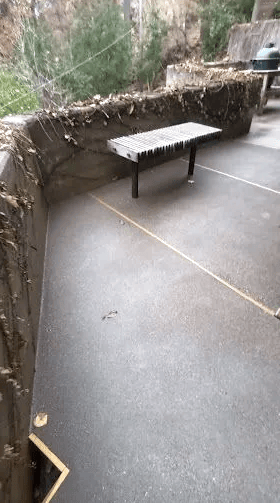
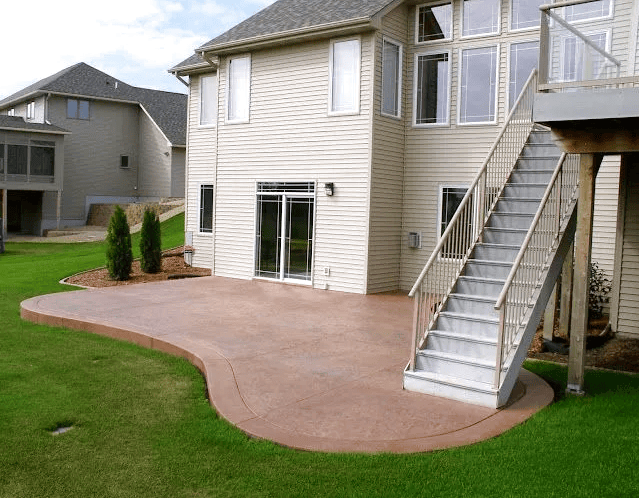
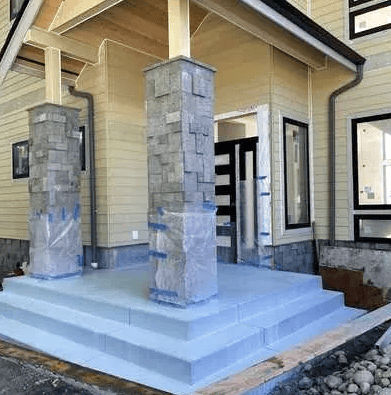
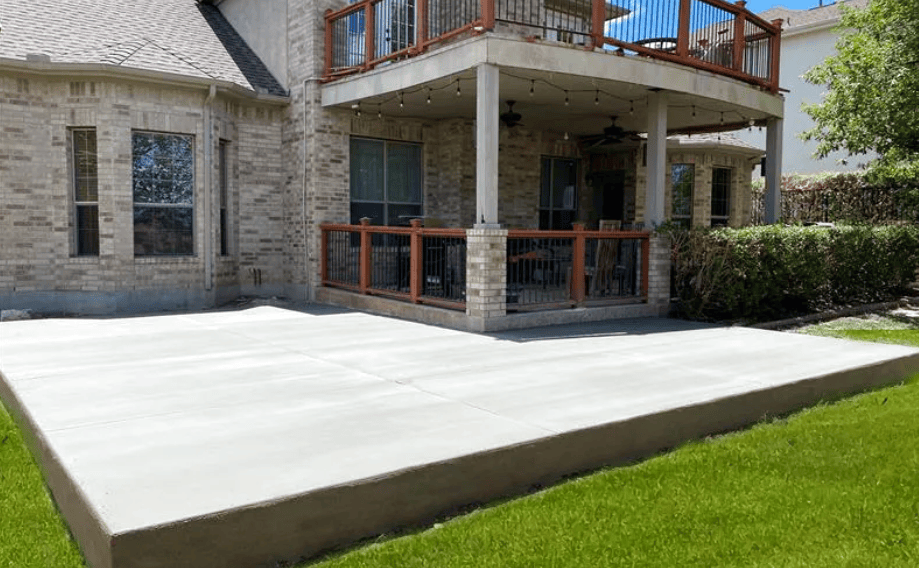
A concrete patio is a solid, poured slab that sits directly on the ground and creates a flat, usable surface outside your home. We build them by first preparing the subgrade, which means removing unsuitable soil, grading the area, and compacting a base layer of #57 crushed stone or compactable gravel. From there, we set forms, place reinforcement like welded wire mesh or rebar, and pour ready-mix concrete to a finished thickness, typically 4 inches for standard residential use or 6 inches where heavier loads are expected. We finish the surface, cut control joints to manage cracking, and let the slab cure fully before you use it.
How It Differs From Pavers, Wood Decks, and Gravel
When you compare a concrete patio vs pavers, the main difference comes down to structure and upkeep. Pavers are individual units set in sand or mortar, which means they can shift, settle unevenly, and allow weeds to push through the joints over time. Gravel shifts underfoot and requires constant raking. Wood decks need regular sealing, are prone to rot, and attract insects. Concrete is a single continuous slab that holds its shape, needs very little attention, and resists rot, pests, and fire.
Why Concrete Is a Strong Fit for Greenville Homes
Greenville sits in the Piedmont Region, where the soil is often red clay or saprolite. These soil types expand when wet and shrink when dry, which puts stress on any surface you lay over them. We account for that by preparing the subgrade correctly and using the right concrete mix for local conditions, including an air entraining admixture to handle the freeze-thaw cycles we get here in the Upstate. A properly built slab graded at a 2 percent drainage slope also handles the heavy rainfall that comes with Greenville's humid subtropical climate, keeping water away from your foundation instead of pooling against it.
Whether your home is near Augusta Road, out in Verdae, or closer to Pebble Creek, the ground conditions and weather patterns we work with every day inform how we build. With over 20 years of combined concrete experience and more than 10 years working right here in Greenville, we know what it takes to pour a slab that holds up long term. Once you understand what goes into building a concrete patio, the next step is figuring out what it can look like, and there are far more options than most people expect.
Concrete Patio Design Options
Getting the design right before we pour a single yard of concrete is one of the most important steps we take on every job. With over 20 years of combined experience and more than 10 years working on outdoor living spaces across Greenville, we know that a well-planned patio lasts longer, functions better, and fits your home the way it should.
Choosing the Right Size and Shape for Your Yard
Size and shape depend on how your yard sits, where water moves, and how you plan to use the space. Greenville's red clay and residual soils common throughout the Piedmont Region affect how we grade and prep the subgrade, so we look at your yard's slope and drainage before anything else. A 2 percent drainage slope away from your home is a standard we follow to keep water moving in the right direction. Rectangular slabs are straightforward to form and reinforce, but freeform or curved shapes work well on lots with irregular boundaries, like many we see in neighborhoods around Augusta Road, Overbrook, and Botany Woods.
Layout Ideas for Dining, Lounging, and Entertaining
A good layout separates how you use different parts of the patio. We often help homeowners think through zones for a dining area, a seating area, and a spot for a grill or fire feature. Concrete patio furniture ideas worth considering early on include built-in planters, integral seating walls, or a wider edge that doubles as a ledge. Planning for these details during the design stage means we can tie them into the slab rather than adding them on later as an afterthought.
Adding Steps, Edges, and Transitions to Your Patio
Where your patio meets the yard, a door threshold, or an existing walkway matters more than most people expect. We form steps and edges to match the grade of your yard and use expansion joint filler and backer rod at transitions to control movement between slabs and adjacent structures. Rounded bull-nose edges are a popular choice and hold up well to foot traffic. For homes near Woodruff Road or off Wade Hampton Boulevard where lots tend to have more grade change, steps become a functional necessity rather than just a design detail.
Integrating Your Patio with Landscaping and Outdoor Features
A concrete patio works best when it connects naturally with what surrounds it. We plan around existing trees, bed lines, and drainage features so the finished slab fits into your yard rather than fighting it. If you have a pool, an outdoor kitchen, or raised beds planned, we coordinate the patio layout to accommodate those features from the start. For homeowners interested in reducing runoff near areas that drain toward Brushy Creek or other local waterways, permeable concrete patios are worth discussing as part of your overall concrete patio design.
Once the layout, size, and transitions are set, the next decision is how the surface itself will look and perform. That comes down to your finish choices.
A few years back, we took on a concrete patio job for a homeowner over in the Travelers Rest area, just north of Greenville. It seemed straightforward at first. The backyard was flat, the weather looked clear, and we had our crew ready to go early on a Monday morning.
About halfway through the pour, the sky opened up. And we are not talking about a light drizzle. This was a full South Carolina summer downpour, the kind that rolls in fast off the Blue Ridge foothills with almost no warning. Rain mixing into fresh concrete is a serious problem. It weakens the surface, causes cracking down the road, and can ruin the finish entirely.
We had to think fast. Part of our crew threw up plastic sheeting across the sections we had already poured while the rest of us worked to keep the pour moving in the areas still protected by the garage overhang. We stayed on that site for hours past our planned finish time, waiting for the rain to let up so we could properly finish the surface.
In the end, the patio turned out solid. The homeowner was worried when she saw the storm roll in, but we walked her through every step we took to protect the work. That job taught us a lot about staying calm under pressure and always having a backup plan on site.
With over 20 years of combined experience pouring concrete and more than 10 years working right here in Greenville, we have learned that things do not always go as planned. What matters is knowing how to handle it when they do not.
Concrete Finish Choices
One of the first decisions you will make for your new patio is how the surface should look and feel. We offer several finish options, and each one has its own strengths depending on how you plan to use the space, your budget, and the style of your home. Whether you are in Botany Woods or along Augusta Road, the right finish can turn a plain slab into a real part of your outdoor living space.
Broom Finish: Simple, Slip-Resistant, and Affordable
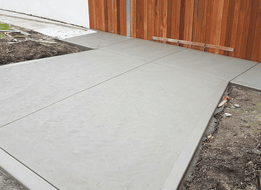
A broom finish is the most common choice for residential patios. After we pour and level the concrete, we drag a stiff brush across the surface while it is still wet. This leaves shallow grooves that give you traction underfoot, which matters a lot in Greenville's humid summers when surfaces stay damp. It is clean, straightforward, and the most budget-friendly option we offer. Maintenance for concrete patios with a broom finish is also about as simple as it gets — sweep it, rinse it, and apply a sealer every few years.
Stamped Concrete: Patterns and Textures That Mimic Stone or Brick
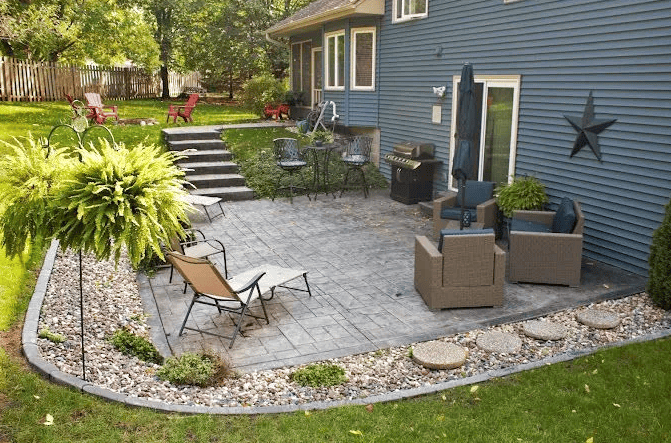
A stamped concrete patio uses rubber mats pressed into fresh concrete to create the look of slate, flagstone, cobblestone, brick, or wood planks. We apply a color hardener to the surface and a release agent before stamping so the pattern has depth and contrast. The result is a surface that looks like natural stone but stays in place and does not shift the way individual pavers can over time. Stamped work does cost more than a broom finish, and it needs periodic resealing to keep colors from fading in the sun.
Stained Concrete: Adding Color and Character to Your Slab
If you want concrete patio colors that feel warm and earthy rather than industrial gray, staining is a strong option. We use acid stains or water-based stains to bring color into the surface. Acid stains react chemically with the concrete and produce a mottled, variegated look that is one of a kind on every slab. Water-based stains give you more predictable, consistent color across the surface. Both options work well when paired with a quality sealer like those from L.M. Scofield or Solomon Colors to protect the finish long-term.
Exposed Aggregate: A Textured, Natural-Looking Surface
With exposed aggregate, we wash away the top layer of cement paste before it fully sets, which reveals the coarse aggregate underneath. The result is a textured, slightly rough surface with a natural look. The stones we use come from local suppliers like Vulcan Materials Greenville, and you can choose aggregate with different colors and sizes. This finish gives you solid traction and handles heavy outdoor furniture without any issues. It also fits well with natural landscaping and blends nicely with the wooded lots common in neighborhoods like Pebble Creek or Chanticleer.
Comparing Finishes by Cost, Maintenance, and Appearance
A broom finish is the least expensive and requires the least upkeep. Stamped and stained finishes cost more upfront and need more attention over time, including regular patio sealing solutions to protect color and surface integrity. Exposed aggregate falls somewhere in between. When it comes to decorative concrete finishes, the right choice depends on how much you want to invest now versus later, and how much visual impact matters to you. We always walk you through each option during our on-site consultation so you can weigh the tradeoffs clearly before any decisions are made.
Once you have settled on a finish, the next step is understanding what goes into the slab itself, including the concrete mix, slab thickness, and how we reinforce the structure to make sure it holds up for decades.
Materials, Thickness, and Reinforcement
What concrete mix we use and why it matters
The mix we pour into your patio form determines how well it holds up over years of use, Upstate South Carolina heat, and the occasional freeze we get in Greenville winters. We typically spec a 4000 PSI compressive strength mix using Type I Portland Cement, which gives your slab the density to resist surface wear and moisture penetration. Depending on conditions, we may also work in fly ash or slag cement as supplementary cementitious materials to improve workability and long-term durability. We keep our water-cement ratio at or below 0.45 to limit porosity, and we add an air entraining admixture when temperatures are expected to swing. Material is sourced locally through suppliers like Piedmont Concrete and Ready Mix USA Greenville, so the mix arrives fresh and meets ASTM C94 standards for ready-mixed concrete.
How thick your patio slab should be
For most residential outdoor concrete flooring projects, a 4-inch slab thickness is the standard under IRC Section R506, and it works well for typical patio furniture, grills, and foot traffic. If you plan to park a vehicle on the surface, store heavy equipment, or add a large outdoor kitchen, we step up to a 6-inch slab thickness to handle the added load. Your specific soil conditions matter here too. Greenville sits in the Piedmont Region where red clay and expansive clay subsoils are common, and those soils can shift with moisture changes. We account for your site's bearing capacity when we make our thickness recommendation.
Rebar and wire mesh: when and why we use reinforcement
Concrete is strong under compression but can crack under tension, which is why reinforcement plays such an important role in concrete patio installation. We use welded wire mesh (6x6 WWM) for standard residential patios and step up to #4 rebar at 18-inch spacing for larger slabs, sloped areas, or sites with weaker subgrades. The reinforcement holds the slab together if minor cracking does occur, keeping any cracks tight and structurally sound rather than wide and separating. In areas where we see a lot of fill soil or poor bearing capacity, proper reinforcement is not optional — it is what separates a patio that lasts from one that becomes a repair job a few years down the road.
Expansion joints and crack control
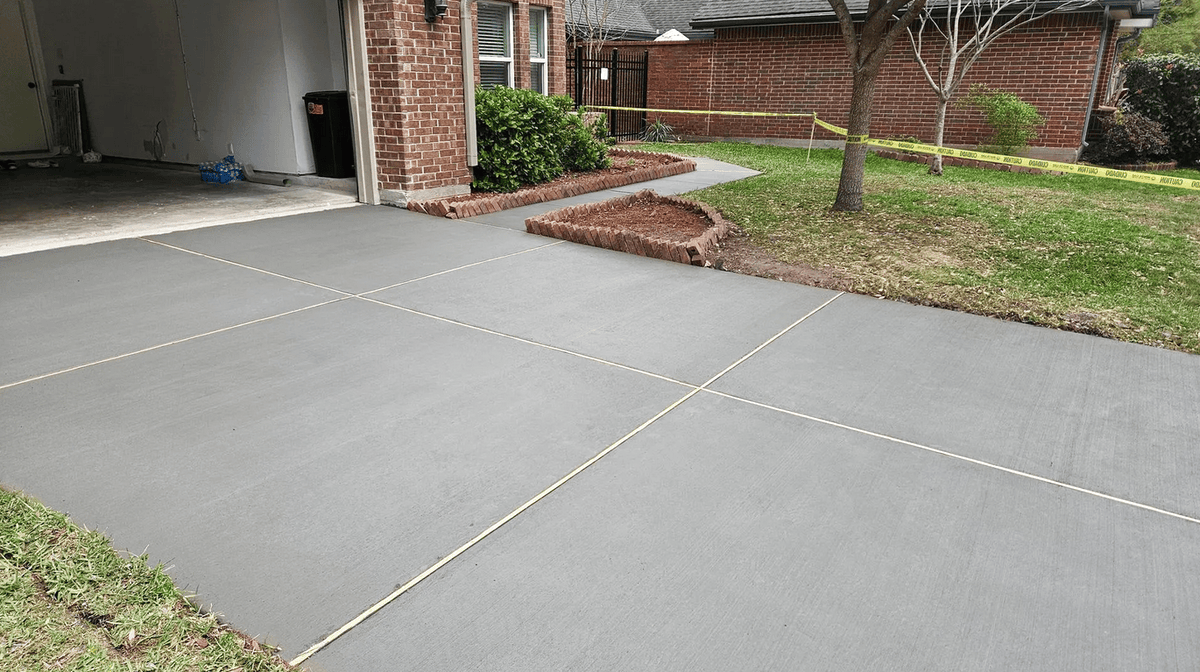
Even a well-mixed, properly reinforced slab will move slightly as temperatures change. That is normal concrete behavior, and the way we manage it is through a planned joint layout. We cut or tool control joints roughly every 10 feet in each direction, which gives the slab a predictable place to relieve stress rather than cracking randomly across the surface. Where your new patio meets an existing structure like your home's foundation or a garage slab, we install expansion joint filler with a backer rod to allow independent movement between the two surfaces. Once the concrete has cured, we fill those joints with a flexible polyurea joint filler to keep debris and moisture out while still allowing movement. Getting joint placement right is one of the details that separates a professional installation from a DIY attempt — and it has a direct impact on how your patio looks and performs years from now.
Before any of that concrete work happens, though, the ground beneath your patio has to be properly prepared. How we handle grading, subgrade compaction, and drainage is what sets the foundation for everything above it.
Site Prep, Grading, and Drainage
Why Site Preparation Matters Before We Pour
Before a single yard of concrete leaves the ready-mix truck, the ground beneath your future patio has to be ready to carry the load. Greenville sits in the Piedmont Region, where the soil is often a mix of red clay, saprolite, and fill soil left over from grading done during home construction. These soils can shift, settle, and hold water in ways that stress a concrete slab over time. We dig out any soft or unsuitable material, then bring in a compactable gravel base and compact it with a vibratory plate compactor in lifts. This gives your slab a stable, uniform foundation that resists settling no matter how wet or dry the season gets.
Grading Your Yard to Move Water Away from Your Home
A flat patio looks clean, but it will collect water. We grade every slab with at least a 2 percent drainage slope, which works out to roughly a quarter inch of drop per foot. That keeps rain moving away from your foundation rather than pooling at your back door. After more than 10 years working in neighborhoods across Greenville, from Augusta Road to Botany Woods, we know how quickly a poorly graded patio can cause long-term problems with erosion and moisture intrusion.
Drainage Solutions for Greenville's Humid Subtropical Climate
Greenville averages around 50 inches of rain per year, and summer storms can be intense and fast-moving. That kind of rainfall puts real pressure on outdoor surfaces. Depending on your yard layout, we may recommend channel drains, French drains, or adjustments to the surrounding grade to direct water toward a safe outlet. We also make sure any drainage plan accounts for how your patio connects to nearby landscaping, hardscaping, and structures.
Permeable Concrete Options for Reducing Runoff
If runoff is a concern on your property, permeable concrete patios are worth considering. This type of concrete uses a reduced amount of fine aggregate, which creates a porous structure that lets water filter down through the slab rather than running off the surface. It works particularly well on lots near the Reedy River or in areas where the City of Greenville Building Codes Division or Greenville County Development Standards may have drainage requirements that affect your project. We can walk you through whether this option fits your site conditions and budget during our initial visit.
Getting site prep and drainage right from the start is what keeps a concrete patio looking and performing well for decades. It also ties directly into something many homeowners overlook until it causes a delay: local permits and requirements.
Meet Your Local Concrete Crew in Greenville, SC
We are a concrete contractor based in Greenville, SC, and we have been pouring and finishing concrete in this area for over 10 years. Our crew brings more than 20 years of combined hands-on experience to every job, from small residential repairs to large commercial pours.
Working in Greenville means we know this area well. We understand the local soil conditions, the humidity that comes with South Carolina summers, and how the seasonal temperature swings here can stress a concrete surface if the mix and curing process are not handled correctly. That kind of local knowledge matters on every job we take on, whether we are installing a driveway in Simpsonville, a pool deck in Taylors, or a commercial slab in downtown Greenville.
We handle the full range of concrete work. That includes driveways, patios, garage floors, pool decks, sidewalks, foundations, retaining walls, stamped and decorative concrete, concrete cutting and removal, resurfacing, sealing, and staining. We also work on commercial and industrial projects, including parking lots, warehouse floors, and ADA-compliant ramps and sidewalks.
When you hire us, you get a crew that shows up prepared. We handle permits, site prep, forming, pouring, finishing, and cleanup. We carry insurance and stand behind our work with a written warranty. You will know exactly what is included before we start, and we keep you informed throughout the project.
If you have a concrete project coming up and want to know what it will take to get it done right, we are glad to come out, take a look, and give you a free estimate.
Permits and Local Requirements in Greenville, SC
Do You Need a Permit for a Concrete Patio in Greenville?
Whether you need a permit depends on where your home sits and what you are building. In the city limits, the City of Greenville Building Codes Division generally requires a permit for flatwork that is attached to your home or exceeds a certain square footage. If you are in the county outside city limits, that falls under Greenville County Building Safety instead. We have worked in both jurisdictions for over ten years, so we know which office handles your address and what they are going to ask for. Skipping a permit when one is required can lead to fines, forced removal, or problems when you sell your home, so we never cut corners on this step.
HOA Rules and Setback Requirements to Know About
Many neighborhoods in Greenville, from Verdae to Chanticleer to Hollingsworth Park, have HOA guidelines that set rules on patio size, finish appearance, and placement. On top of that, city and county setback rules dictate how close any structure, including a concrete patio, can get to your property line. These requirements vary by zone and lot size. Before we ever dig or form, we look at your plat, check the zoning, and confirm any HOA restrictions so nothing gets built in the wrong spot.
How We Handle the Permit Process for You
We take care of the permitting paperwork on your behalf. That includes preparing the necessary site plan, submitting documents to the correct office, coordinating any required inspections, and making sure your concrete patio installation closes out with a passed inspection on file. You do not have to navigate city or county offices on your own. Once permits are approved and inspections are scheduled, we can talk through project timelines, which brings us to the next thing most homeowners want to know: what a concrete patio in Greenville is likely to cost.
How Much Does a Concrete Patio Cost in Greenville, SC?
Pricing a concrete patio comes down to more than just square footage. After more than 20 years pouring concrete and over 10 years working across Greenville, we have a solid understanding of what drives costs here locally. Below we break it down so you know what to expect before we ever set foot on your property.
Factors That Affect the Price of Your Patio
Several things influence what you will pay. Site conditions matter a great deal in Greenville. The Piedmont Region is known for red clay, expansive clay soils, and saprolite, all of which may require extra excavation, subgrade prep, or a deeper compactable gravel base before we pour a single yard of concrete. Poor soil bearing capacity adds labor and material costs but is necessary to prevent settling and cracking down the road.
The finish you choose also plays a big role. A basic broom finish costs less than stamped concrete, stained surfaces, or exposed aggregate work. Decorative concrete finishes require more skilled labor, specialty tools, and materials like color hardener, release agent, or integral color pigment, all of which add to the total. Slab thickness matters too. A standard residential patio typically calls for a 4-inch slab, but if you plan to park a vehicle or place very heavy features on it, a 6-inch slab with rebar is the right call. Access to your yard, the need for a concrete pump truck, and whether permits are required through the City of Greenville Building Codes Division or Greenville County Building Safety can also affect the final number.
Average Cost Ranges by Patio Size and Finish Type
For a plain broom finish patio, most homeowners in areas like Augusta Road, Verdae, or Pebble Creek are looking at roughly $8 to $12 per square foot installed. A mid-range decorative option such as a stained or colored surface typically runs $12 to $18 per square foot. A stamped concrete patio with borders, multiple colors, or custom patterns can range from $18 to $25 or more per square foot depending on complexity. These ranges reflect current material costs sourced from local suppliers and the labor required to do the job correctly under Greenville conditions. Keep in mind that concrete patio installation done right the first time will always cost less over time than cheap work that needs repair or replacement in a few years.
How to Get an Accurate Quote From Us
The most reliable way to get a real number is to have us come out and look at your property. We check the slope, soil, access, and any drainage concerns before quoting. We will ask about your preferred concrete patio design, size, finish type, and whether you want features like steps, a border, or patio sealing solutions applied after the cure. Once we have that information, we put together a written quote that covers materials, labor, site prep, and cleanup with no hidden line items.
Financing Options and Seasonal Availability
We work with financing partners that offer payment plans for qualified homeowners, which can make a larger outdoor living spaces project easier to fit into your budget. On the scheduling side, spring and early fall tend to be our busiest seasons in Greenville, so lead times can stretch out. Winter months, when temperatures are cool but above freezing, can actually be a solid time to pour concrete, and we sometimes have more availability then. Booking early gives you the best chance of landing the dates that work for your household.
Once your quote is accepted and a start date is confirmed, the next step is understanding exactly how your project will move from site prep to finished slab, which is what we walk through in the next section.
Project Timeline and What to Expect
How Long It Takes to Install a Concrete Patio
Most concrete patio installations in Greenville take one to three days of active work, depending on the size, concrete patio design, and site conditions. A straightforward broom-finish slab on a prepared lot moves faster than a stamped concrete patio with custom borders and integral color. After the pour, plan on waiting before you walk on or furnish the slab. We will always give you a realistic timeframe before any work begins.
Our Step-by-Step Process from Site Visit to Final Pour
We start with a site visit to measure, check grade, and look at your soil. Greenville sits in the Piedmont Region, and the red clay and residual soils here can shift if they are not handled correctly. We excavate, compact a gravel base, set forms, and place reinforcement before the ready-mix truck ever arrives. On pour day we consolidate the concrete, screed, float, and apply your chosen finish. Control joints are cut or tooled at the right spacing to manage cracking. If your project needs a permit through the City of Greenville Building Codes Division or Greenville County Building Safety, we handle that paperwork ahead of time so there are no surprises.
Lead Times and Scheduling in Greenville
We typically schedule new concrete patio installation projects two to four weeks out, though that window can stretch during busy spring and fall seasons. Weather matters too. We plan pours around rain forecasts and temperature swings because a pour during a Greenville summer afternoon or a cold snap can affect the finished surface and long-term strength. Booking early gives you more flexibility on start dates.
Curing Time and When You Can Use Your New Patio
Concrete reaches enough strength for light foot traffic in about 24 to 48 hours, but full strength develops over a 28-day cure. We apply a quality cure and seal compound to slow moisture loss and protect the surface during that period. You can typically place outdoor living spaces furniture on the slab after about a week, but we will give you specific guidance based on your mix design and the conditions at the time of your pour. Respecting the curing window now means a harder, more durable surface for years ahead, which ties directly into what good long-term maintenance looks like.
Maintenance, Warranty, and Long-Term Care
A concrete patio is one of the lower-maintenance outdoor surfaces you can choose, but it still needs some routine attention to stay in good shape over the years. Here is what we tell every homeowner after we finish a pour.
How to Clean and Maintain Your Concrete Patio
For most patios, regular sweeping and an occasional rinse with a garden hose is enough to keep the surface looking clean. For tougher stains from grease or organic matter, a mild detergent and a stiff brush usually do the job. Greenville's humid subtropical climate means mold and mildew can show up on shaded surfaces, especially near areas like the Reedy River corridor where moisture stays high. A diluted sodium hypochlorite solution handles that well. Avoid using harsh acids or pressure washing too aggressively, as those can break down the surface over time, particularly on stamped concrete patios or decorative concrete finishes.
Sealing Your Patio to Protect Against Stains and Weather
We recommend sealing your patio every two to three years depending on traffic and sun exposure. A quality acrylic cure and seal product gives solid protection against staining and moisture penetration. For patios with integral color pigment or a stamped finish, sealing also helps preserve the appearance of concrete patio colors over time. If you want deeper surface hardening, a lithium silicate densifier applied before the topcoat sealer adds durability. Patio sealing solutions vary by finish type, so we will walk you through the right product for your specific slab when we hand the job off to you.
What Our Workmanship Warranty Covers
We stand behind our concrete patio installation work. Our warranty covers defects in workmanship, including problems with joint layout, finish quality, and slope. We pour to a 2 percent drainage slope and place control joints every 10 feet to reduce the chance of random cracking. If something does go wrong due to how we built it, we come back and make it right. What the warranty does not cover is damage from tree roots, ground movement from expansive clay or fill soil beneath the slab, or surface wear from chemicals you apply after the job is done. We will be upfront with you about what falls inside and outside of that coverage.
How Long a Concrete Patio Lasts in Greenville's Climate
A properly installed concrete patio in Greenville can last 30 years or more. Greenville sits in the Piedmont Region where the soil often includes red clay and saprolite, which can shift when moisture levels change. That is why subgrade preparation matters so much. We compact a gravel base, use 4000 PSI compressive strength concrete mixed to a low water-cement ratio, and include fiber reinforcement where it makes sense. Greenville does not see hard freeze-thaw cycles like states further north, but summer heat and occasional ice events still affect surface durability over time. Routine sealing and avoiding heavy point loads on the slab edge will help your patio reach its full lifespan.
Even with the best installation and maintenance, older patios eventually develop minor cracking, surface wear, or simply need more space. That is where repair, resurfacing, and patio extension work come in.
Repair, Resurfacing, and Patio Extensions
Not every project starts from scratch. We work with a lot of homeowners across Greenville who already have a concrete patio but need help bringing it back to life or making it bigger. Whether your slab is showing its age or you just need more room for outdoor living spaces, there are good options worth knowing about before you decide to tear anything out.
Signs Your Existing Patio Needs Repair or Replacement
Some problems are cosmetic. Others point to something deeper. Surface discoloration, minor scaling, or hairline cracks that stay stable are usually repair territory. But if you are seeing wide cracks that shift up or down at the edges, sections that rock when you walk on them, or areas where the slab has sunk noticeably, those are signs the subgrade underneath has moved or failed.
Greenville sits in the Piedmont Region, where expansive red clay and residual soil are common. That soil swells when wet and shrinks when dry, and over time it can pull support away from a slab. If your patio was poured without proper base preparation or without control joints placed at the right intervals, you may be seeing the result of that now. We can take a look at what you have and give you a straight answer on whether repair makes sense or whether replacement is the better path long-term.
Resurfacing Options to Refresh a Worn Concrete Patio
If the slab is structurally sound but the surface looks tired, resurfacing is a practical way to get more years out of it. We can apply a bonded overlay, add decorative concrete finishes, or use color hardener and a fresh stamped concrete patio texture to give the surface a completely different look. Products from Brickform and L.M. Scofield hold up well in Greenville's humid subtropical climate when applied correctly over a prepared surface.
We also use patio sealing solutions after resurfacing to protect the new surface from moisture, UV exposure, and foot traffic. An acrylic cure and seal or a lithium silicate densifier can extend the life of a resurfaced slab considerably. The right product depends on the finish and how the patio gets used day to day.
Extending an Existing Patio to Add More Space
Adding square footage to an existing patio is one of the more common requests we get, especially in neighborhoods like Augusta Road, Botany Woods, and Verdae where outdoor entertaining is a big part of how people use their homes. The main consideration is making sure the new pour ties into the existing slab correctly and that expansion joint filler is placed between the two sections to allow for independent movement.
We match the concrete patio design and finish of the original slab as closely as possible, though a full match on an aged surface is not always achievable. If the existing patio has a broom finish, we can extend it in kind. If you want to take the extension in a different direction with a stained or stamped surface, we can show you how to create a clean transition that looks intentional. We also check the drainage slope on the existing slab before we form the extension, because adding square footage changes where water moves. A 2 percent drainage slope away from the house is the standard we hold to. The City of Greenville Building Codes Division may require a permit depending on the size of the addition, and we handle that process as part of the project.
Whether you need a small crack repaired, a full resurfacing, or a substantial addition to your existing patio, the right first step is having someone come out and take a look at what you are working with. That is exactly what we do before we give you any numbers or recommendations.
Why Choose Us for Your Concrete Patio in Greenville
Our Experience Pouring Concrete and Working in Greenville
We have over 20 years of combined experience pouring concrete and more than a decade working right here in Greenville. That means we know the local soil. Much of Greenville sits on residual soil and red clay typical of the Piedmont Region, which can shift and expand with moisture changes. We account for that during subgrade prep and base compaction so your patio stays level and crack-free over time. Whether you are in Botany Woods, Verdae, or along Augusta Street, we have worked in neighborhoods like yours and understand what each site needs. We mix concrete to at least 4000 PSI compressive strength, use proper fiber reinforcement or rebar, and grade every slab at a 2 percent slope so water drains away from your home cleanly.
Licensing, Insurance, and Local References
We carry a valid South Carolina Contractor License and maintain full liability and workers' compensation insurance on every job. Before we break ground, we coordinate with the City of Greenville Building Codes Division or Greenville County Building Safety as needed, depending on where your property sits. You never have to chase permits yourself. Our concrete patio installation process follows ACI 301 standards, and we source ready-mix through trusted local suppliers so the mix design is consistent every pour.
What Past Customers in Greenville Have Said About Our Work
Homeowners in areas like North Main, Overbrook, and Chanticleer have trusted us with everything from basic broom-finish slabs to stamped concrete patio projects with integral color pigment and decorative concrete finishes. They tell us they chose us because we showed up when we said we would, explained the process clearly, and left the site clean. Many of them have referred us to neighbors, which is still how a good portion of our work comes in. That kind of local word-of-mouth matters more to us than any advertisement.
If you want to talk through your outdoor living space goals before committing to anything, reaching out for a site visit is a straightforward next step.
Ready to Build Your Concrete Patio in Greenville, SC?
Choosing the right contractor makes all the difference between a patio that lasts decades and one that cracks, settles, or drains poorly after a few Upstate summers. We have spent over 20 years pouring concrete and more than 10 years working right here in Greenville, so we understand what your yard, your soil, and your climate actually need.
When you work with us, here is what you get:
- A crew that knows Greenville's red clay and expansive soils and prepares your subgrade the right way before a single yard of concrete is poured
- The correct concrete mix, slab thickness, and reinforcement for your specific site and use
- Control joints placed where they belong so your patio holds up and stays looking clean
- Proper slope and drainage so water moves away from your home, not toward it
- Finish options that fit your style, from stamped concrete patio patterns to exposed aggregate and broom textures
- Full compliance with permits through the City of Greenville Building Codes Division or Greenville County Building Safety, depending on your location
- A licensed, insured contractor who stands behind the work with a written warranty
- Honest timelines, clear pricing, and no surprises once the job starts
A professionally installed concrete patio adds usable outdoor space, supports your furniture and outdoor features without shifting, and holds its value for years with very little upkeep. Whether you are in Augusta Road, Verdae, Botany Woods, or anywhere else in the Greenville area, we are ready to come out, look at your space, and talk through your options.
Fill out the quote form below or give us a call to get your free, no-obligation estimate. We would love to help you get started.
Greenville SC Concrete
220 N Main St
Greenville, SC 29601
Business Hours
| Mon | 8:00 AM – 7:00 PM |
| Tue | 8:00 AM – 7:00 PM |
| Wed | 8:00 AM – 7:00 PM |
| Thu | 8:00 AM – 7:00 PM |
| Fri | 8:00 AM – 7:00 PM |
| Sat | 9:00 AM – 6:00 PM |